
How to Make Delicious Campfire Coffee
Quick answer
- Get your water boiling before you start your campfire.
- Choose a reliable brewing method: percolator, pour-over, or French press work best.
- Use good quality, fresh coffee grounds. Coarse grind is usually best for camp methods.
- Don’t boil your coffee grounds directly. This makes it bitter.
- Pack out all your coffee grounds and filters. Leave No Trace.
- Practice at home first. Seriously.
What to check first (do this before you drive out)
Before you even think about that first sip of smoky goodness, there are a few key things to nail down. This isn’t just about good coffee; it’s about being prepared and responsible.
- Land manager / legality: Who’s in charge of where you’re camping? Is it National Forest, BLM land, a State Park, or private? Each has its own rules, especially about fires. Check the official website for the specific area. Some places have permits or specific camping regulations.
- Access/road conditions: Can your rig actually get there? A dusty forest road might be fine for a Subaru, but a mud bog or a rocky track needs something more. Know your vehicle’s limits and check recent conditions if possible. High-clearance or 4WD might be a must.
- Fire restrictions + weather + wind: This is huge. Fire bans are common, especially in dry seasons. A campfire ban means no campfire coffee. Check the local fire danger levels and weather forecast. High winds can make campfires dangerous and hard to manage. Always have a backup plan if conditions are iffy.
- Water plan + waste plan (Leave No Trace): You need water for coffee, obviously. How much? Will you filter/treat it on site, or carry it all in? And what about the grounds? They’re organic waste. Pack them out. Don’t just dump them. Stick to Leave No Trace principles.
- Safety (wildlife, distance to help, comms): Keep food secure from critters, especially when you’re focused on brewing. Know how far the nearest ranger station or town is. Cell service is often spotty or non-existent. Have a plan for emergencies.
Step-by-step (field workflow)
Alright, let’s get to it. This is how you make that magic happen.
1. Gather your gear.
- What to do: Pack your coffee maker (percolator, pour-over setup, French press), coffee grounds, filter (if needed), mug, and a way to heat water (pot, kettle).
- What “good” looks like: Everything is accounted for and easily accessible. You’re not digging through your pack for your coffee scoop.
- Common mistake: Forgetting the coffee maker. Happens to the best of us. Double-check your list.
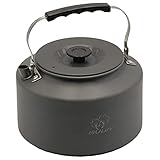
When gathering your gear, don’t forget a sturdy camping kettle like this one to heat your water efficiently over the fire or stove.
2. Start your campfire (if allowed).
- What to do: If fire restrictions permit, build a safe and efficient campfire. Use established fire rings.
- What “good” looks like: A controlled fire with a good bed of coals, not a raging inferno.
- Common mistake: Building a fire too big, or in an unsafe spot. This wastes wood and can be dangerous.
3. Heat your water.
- What to do: Place your pot or kettle with water over the fire or on a camp stove.
- What “good” looks like: Water is nearing a rolling boil. For many methods, you want it just off the boil.
- Common mistake: Boiling the coffee grounds directly in the pot. This is a fast track to bitter, awful coffee.
For heating your water, a durable camping kettle is ideal, ensuring you get that perfect near-boil without fuss.
4. Prepare your coffee maker.
- What to do: If using a percolator, add grounds to the basket. For pour-over, insert filter and add grounds. For French press, add grounds to the bottom of the carafe.
- What “good” looks like: Grounds are measured correctly for your water volume.
- Common mistake: Using too much or too little coffee. Too much is bitter, too little is weak. Aim for about 1-2 tablespoons per 6 ounces of water.
5. Brew your coffee.
- What to do:
- Percolator: Add hot water to the pot, place basket, put lid on, and heat gently until it percolates.
- Pour-over: Pour hot water slowly over grounds in the filter, letting it bloom first.
- French press: Add hot water to grounds, stir gently, let steep for 4 minutes, then press plunger.
- What “good” looks like: A rich, dark liquid is forming, smelling amazing.
- Common mistake: Letting the coffee boil aggressively. This over-extracts the grounds and makes it bitter. Gentle heat is key.
6. Let it steep/settle.
- What to do: For French press, let it sit. For percolator, let it sit for a minute after percolating. For pour-over, the water is already through.
- What “good” looks like: Grounds have settled to the bottom.
- Common mistake: Pouring immediately without letting grounds settle. You’ll get sludge in your cup.
7. Pour and enjoy.
- What to do: Carefully pour your coffee into your mug.
- What “good” looks like: A steaming, aromatic cup of coffee.
- Common mistake: Pouring too fast and getting grounds in your mug. Slow and steady wins the race.
8. Clean up.
- What to do: Pack out all coffee grounds and filters. Wash your gear.
- What “good” looks like: Your campsite is cleaner than you found it. No trace left behind.
- Common mistake: Leaving grounds behind. This attracts animals and is just plain bad form.
Common mistakes (and what happens if you ignore them)
| Mistake | What it causes | Fix |
|---|---|---|
| Boiling coffee grounds directly | Bitter, acrid, undrinkable coffee | Heat water <em>separately</em> and add to grounds. |
| Using old, stale coffee grounds | Flat, lifeless flavor, lacks aroma | Use fresh beans and grind them just before you leave, or buy pre-ground fresh. |
| Incorrect grind size | Over-extraction (bitter) or under-extraction (weak) | Coarse grind for French press/percolator; medium for pour-over. Check your maker’s recommendation. |
| Forgetting essential gear | No coffee, or a very frustrating attempt at making it | Make a detailed checklist and pack it in the same place every time. |
| Ignoring fire restrictions | Fines, fire, and a ruined camping trip | Always check current fire bans <em>before</em> you leave home and at the ranger station. |
| Leaving grounds or filters behind | Attracts animals, looks messy, disrespectful | Pack out <em>all</em> coffee grounds and used filters. |
| Not having enough water | Can’t make coffee, or have to cut trip short | Plan your water needs for drinking, cooking, <em>and</em> coffee. |
| Campfire too hot/uncontrolled | Burns coffee, hard to manage, fire hazard | Aim for a steady heat source, preferably coals, not roaring flames. |
| Not securing food/trash | Critters raid your camp, potentially dangerous | Store food and trash properly, especially at night. |
Decision rules (simple if/then)
- If fire restrictions are in place, then you must use a camp stove or skip the hot coffee, because campfires are banned.
- If the road is very rough and muddy, then you need 4WD and high clearance, because a regular car will get stuck.
- If you are in bear country, then keep all food and scented items (like coffee grounds) sealed and stored properly, because bears are attracted to smells.
- If you are unsure about water safety, then always treat or filter your water, because untreated water can make you sick.
- If you want to avoid bitter coffee, then do not boil your coffee grounds, because boiling over-extracts them.
- If you are in a high wind area, then be extra cautious with your campfire and have a stove backup, because wind can spread embers quickly.
- If you are deep in the backcountry with no cell service, then have a satellite communication device, because you can’t rely on your phone.
- If you are camping during peak fire season, then pack extra water for cleaning and dousing your fire, because you need to be extra careful.
- If you are making French press coffee, then use a coarse grind, because fine grounds will pass through the filter.
- If you are using a percolator, then heat it gently, because a rolling boil can make the coffee taste burnt.
- If you are unsure about the land manager’s rules, then stop by the nearest ranger station, because they have the most up-to-date information.
- If you want the best flavor, then grind your beans right before brewing, because pre-ground coffee loses its aroma and taste quickly.
FAQ
How much coffee should I bring?
A good rule of thumb is 1-2 tablespoons of grounds per 6 ounces of water. Bring a little extra, just in case.
What’s the best way to heat water for coffee at camp?
A simple camp stove is often easiest and most reliable. If using a campfire, aim for a bed of hot coals rather than direct flames.
A reliable camping kettle is often the best way to heat water for coffee at camp, whether over a stove or hot coals.
Can I just boil grounds in a pot?
You can, but it’s generally not recommended for good flavor. It tends to make coffee bitter and sludgy. Dedicated coffee makers are worth the extra gear.
What kind of coffee maker is best for camping?
Percolators are classic and durable. Pour-over is lightweight and offers control. French presses make a rich cup but are more fragile. Choose what fits your style and gear.
How do I clean my coffee gear at camp?
Use minimal biodegradable soap if needed, rinse thoroughly with water, and pack out all grounds and rinse water if possible. Otherwise, disperse rinse water away from water sources.
Is it okay to bury coffee grounds?
No. Pack them out. Burying them can attract animals and doesn’t fully break down quickly. Leave No Trace means pack it in, pack it out.
What if I forgot my coffee filter?
Some campers use a clean bandana or a piece of cloth in a pinch for pour-over, but it’s not ideal. A backup method like instant coffee is a good idea.
How do I keep my coffee warm?
A good insulated mug is your best bet. Some people use a thermos, but that’s extra weight. Enjoy it while it’s hot!
What this page does NOT cover (and where to go next)
- Specific campsite reservation systems and booking windows. Check the land manager’s website.
- Detailed bear safety protocols. Consult local wildlife agency guidelines.
- Advanced campfire building techniques. Look for resources on wilderness fire safety.
- Detailed water filtration and purification methods. Research water treatment options for backcountry travel.
- Specific gear reviews for coffee makers. Explore camping gear forums and review sites.