
How Long a 16 oz Propane Tank Lasts
Quick answer
- A 16 oz propane tank typically lasts between 1.5 to 3 hours for a single-burner camp stove.
- Burn time depends heavily on the stove’s BTU output and how high you run the flame.
- For a lantern, expect 3 to 6 hours of light.
- Two tanks are usually good for a weekend trip for one person, maybe more if you cook a lot.
- Always pack an extra tank, just in case. Running out of fuel mid-meal is a bummer.
- Keep an eye on the weight; a full tank is noticeably heavier.
What to check first (do this before you drive out)
Before you head out, a few things need a quick once-over. It’s not complicated, just smart planning.
- Land manager / legality: Who’s in charge of the land you’re visiting? Is it National Forest, BLM land, a State Park, or private? Each has its own rules, especially about fires and where you can camp. A quick check of the managing agency’s website is usually all it takes. Don’t assume; rules change.
- Access/road conditions: How are the roads looking? Is your rig ready for what’s ahead? A standard sedan might be fine for a paved campground, but a high-clearance 4×4 is a must for some forest service roads. Check recent reports if you can, especially after heavy rain or snow. Mud can be a real pain.
- Fire restrictions + weather + wind: This is a big one. Fire bans are common, especially in dry seasons. Check the local fire danger level. Also, peek at the weather forecast. High winds can make cooking tricky and increase fire risk. A sudden storm can ruin a trip if you’re not prepared.
- Water plan + waste plan (Leave No Trace): Do you have enough potable water for drinking, cooking, and cleaning? And what’s your plan for human waste and trash? Packing out everything you pack in is key. Burying human waste properly (6-8 inches deep, 200 feet from water) is critical if toilets aren’t available.
- Safety (wildlife, distance to help, comms): Know what wildlife is common in the area and how to store food properly to avoid unwanted visitors. How far is the nearest ranger station or town? Do you have cell service, or will you need a satellite communicator? It’s good to have a plan for emergencies.
Step-by-step (field workflow)
Here’s how to get your camp stove fired up and running smoothly, using that 16 oz propane tank.
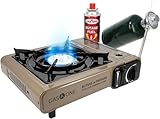
To get started, you’ll need a reliable portable camping propane stove. Consider this highly-rated model for your next trip.
1. Inspect the tank:
- What to do: Look for any dents, rust, or damage to the valve threads.
- What “good” looks like: The tank should look clean, with no visible damage. The valve threads should be clean and free of debris.
- Common mistake: Using a tank with a damaged valve.
- How to avoid: Always give your tank a quick once-over before connecting it. If it looks iffy, don’t use it.
2. Connect the stove:
- What to do: Screw the stove’s regulator onto the tank’s valve.
- What “good” looks like: It screws on smoothly and tightens securely by hand. No leaks.
- Common mistake: Overtightening or cross-threading.
- How to avoid: Just hand-tighten. You’ll feel it seat. Don’t use tools unless the manufacturer specifically says to.
3. Check for leaks (optional but recommended):
- What to do: Mix a little dish soap with water. Apply it to the valve connection.
- What “good” looks like: No bubbles form.
- Common mistake: Skipping this step and not knowing you have a slow leak.
- How to avoid: A quick soapy water check is fast and can prevent bigger issues.
4. Open the tank valve:
- What to do: Slowly turn the valve on the propane tank counter-clockwise.
- What “good” looks like: You’ll hear a faint hiss as gas starts to flow.
- Common mistake: Opening it too fast.
- How to avoid: Slow and steady is the way to go.
5. Ignite the stove:
- What to do: Use your lighter or the stove’s igniter.
- What “good” looks like: A clean blue flame.
- Common mistake: Holding the lighter too far away or not fully opening the gas.
- How to avoid: Get the ignition source close to the burner and ensure gas is flowing before you try to light.
6. Adjust flame height:
- What to do: Use the stove’s control knob to set the desired flame.
- What “good” looks like: A steady flame, not too high (yellow and wavy) or too low (flickering out). A good simmer is often a low, steady blue flame.
- Common mistake: Running the stove on high constantly.
- How to avoid: Use the lowest setting that effectively cooks your food. This saves fuel.
7. Cook your meal:
- What to do: Prepare and cook your food.
- What “good” looks like: Food cooked to your liking.
- Common mistake: Trying to cook too much at once, leading to uneven cooking and longer burn times.
- How to avoid: Cook in batches if necessary.
8. Turn off the stove:
- What to do: Turn the stove’s control knob to the OFF position.
- What “good” looks like: The flame extinguishes completely.
- Common mistake: Forgetting to turn off the stove’s control knob.
- How to avoid: Always turn off the stove’s knob first.
9. Close the tank valve:
- What to do: Turn the valve on the propane tank clockwise until it stops.
- What “good” looks like: All gas flow is shut off.
- Common mistake: Leaving the tank valve open after turning off the stove.
- How to avoid: Always close the tank valve after turning off the stove’s control. This purges the line.
10. Disconnect the stove:
- What to do: Unscrew the stove’s regulator from the tank.
- What “good” looks like: It comes off easily.
- Common mistake: Forgetting to disconnect after use, leaving the valve open on the tank.
- How to avoid: Make it a habit to disconnect and store both components separately.
Common mistakes (and what happens if you ignore them)
| Mistake | What it causes | Fix |
|---|---|---|
| Running the stove on high constantly | Drains propane much faster, uses more fuel than needed. | Adjust flame to the lowest setting that cooks effectively. |
| Not checking fire restrictions | Fines, potential wildfire, jail time. A really bad day. | Always check local fire danger levels and burn bans before heading out. |
| Using damaged propane tanks | Leaks, potential fire hazard, inconsistent flame. | Inspect tanks for dents, rust, or valve damage before each use. Discard damaged tanks. |
| Forgetting to close the tank valve | Propane leaks out, potential fire hazard, empty tank when you need it. | Always close the tank valve <em>after</em> turning off the stove’s control knob. |
| Overtightening the regulator | Can damage the valve threads on the tank or regulator, leading to leaks. | Hand-tighten only. You should feel it seat securely without excessive force. |
| Not having a backup fuel source | Running out of fuel mid-cooking or mid-trip, leading to cold meals. | Pack an extra 16 oz tank or a larger multi-fuel stove for longer trips. |
| Not checking road conditions | Getting stuck, damaging your vehicle, needing a tow. | Research road conditions and know your vehicle’s capabilities before you go. |
| Relying solely on cell service for comms | No signal when you need help, delaying emergency response. | Carry a satellite communicator or personal locator beacon for remote areas. |
| Not planning for waste disposal | Environmental damage, attracting wildlife, leaving a mess for others. | Pack out all trash and know LNT principles for human waste disposal. |
| Not securing the stove properly | Stove can tip over, spilling hot food or fuel, potential fire. | Use on a stable, level surface. Consider a windscreen to prevent flame instability. |
| Mixing different fuel types on a stove | Can damage the stove, cause incomplete combustion, and produce toxic fumes. | Use only the fuel type recommended by the stove manufacturer. |
| Ignoring wind | Inefficient cooking, wasted fuel, potential for flame to blow out or flare up. | Use a windscreen, adjust flame height, and position yourself to block the wind. |
Decision rules (simple if/then)
Here are some quick rules of thumb for propane tank use:
- If you’re boiling water for coffee or rehydrating a meal, then a low to medium flame will likely suffice because you don’t need high heat for long.
- If you’re searing a steak or cooking something that needs a quick, hot sear, then you’ll need to run the stove on high, which burns through propane faster.
- If your stove has adjustable BTU output, then check its rating to estimate burn time; higher BTU means faster fuel consumption.
- If you’re camping solo for a weekend, then two 16 oz tanks are usually a safe bet, unless you’re doing extensive cooking.
- If you’re cooking for a group of 3-4 people, then you’ll probably need 3-4 tanks for a weekend, depending on meal complexity.
- If you’re in cold weather, then propane vaporizes less efficiently, and you might need to keep tanks warmer to maintain performance, potentially affecting burn time.
- If you’re using a propane lantern, then expect a longer burn time than a stove because lanterns use less fuel.
- If you’re unsure about how much fuel you’ll need, then it’s always better to pack an extra tank than to run out.
- If you notice the flame flickering or becoming weak, then it’s a sign your tank is getting low on fuel.
- If you’re doing very simple meals like just heating water, then one 16 oz tank could last you a full weekend for one person.
- If you’re using a multi-burner stove, then you’ll burn through fuel much faster than with a single burner.
- If you’re concerned about fuel availability, then consider a larger refillable propane cylinder and adapter for longer trips.
When planning your fuel needs, remember that it’s always better to pack an extra 1 lb propane cylinder than to run out mid-meal.

FAQ
How long does a 16 oz propane tank last on a camp stove?
Generally, 1.5 to 3 hours of continuous burn time, depending on the stove’s heat output.
Does a higher BTU stove use propane faster?
Yes, significantly. Higher BTU means more fuel is burned per hour.
Can I use a 16 oz propane tank for a propane grill?
Most small portable grills are designed for these tanks, but always check your grill’s specifications. Larger grills usually require larger tanks.
How many meals can I cook with one 16 oz propane tank?
It varies wildly, but for simple meals (like boiling water for instant noodles or coffee), one tank might cover 4-6 meals for one person.
What happens when a propane tank runs out?
The flame will get weaker and eventually go out. It’s good to notice this before your dinner is still raw.
Are there alternatives to 16 oz propane tanks for camping stoves?
Yes, many stoves are multi-fuel, using white gas, kerosene, or even wood. There are also canister stoves using different fuel mixes.
How should I store unused propane tanks?
Store them upright in a cool, dry, well-ventilated area, away from heat sources or open flames.
Can I refill 16 oz propane tanks?
No, these disposable tanks are not designed to be refilled. They should be properly recycled or disposed of.
While these 1 lb propane cylinders are convenient, they are not designed to be refilled and should be disposed of properly after use.
Is propane safe to use in my tent?
Absolutely not. Never use propane appliances inside a tent or any enclosed space due to carbon monoxide risk and fire hazard.
What this page does NOT cover (and where to go next)
- Detailed reviews of specific camp stove models.
- Advanced fuel management techniques for multi-week expeditions.
- Specific campsite regulations or reservation systems.
- Repair guides for damaged propane stoves or regulators.
- Alternative fuel types like white gas, kerosene, or alcohol stoves.

Camping Bob has spent over 20 years camping across the US — from BLM dispersed sites in the Southwest to KOA campgrounds in the Pacific Northwest. He writes practical, no-nonsense guides to help fellow campers get outdoors with confidence.