
Guide To Camping Near The Methow River
Quick answer
- Plan your trip for late spring through early fall.
- Check the Okanogan-Wenatchee National Forest website for current fire restrictions.
- Be ready for variable road conditions, especially on forest service roads.
- Pack plenty of water; reliable sources are scarce.
- Know your fishing regulations if you plan to cast a line.
- Leave No Trace is key: pack it in, pack it out.
- Cell service is spotty at best. Tell someone where you’re going.
What to check first (do this before you drive out)
Before you point your rig towards the Methow River, get your ducks in a row. This ain’t the city park, and a little prep goes a long way.
- Land manager / legality: Who’s in charge? Mostly, it’s the Okanogan-Wenatchee National Forest. But there are also BLM lands and private property. Know where you’re allowed to camp. A quick look at their MVUM (Motor Vehicle Use Map) is your best friend. It shows you what roads are open and where dispersed camping is permitted.
- Access/road conditions: Forest roads can be gnarly. Some are paved, some are gravel, and some are just two-track ruts. If you’re in a low-clearance sedan, stick to the main highways and established campgrounds. AWD or 4WD is often a good idea if you plan to explore the deeper forest roads. Always check recent trip reports or call the local ranger station if you’re unsure about a specific road. Mud season or early snow can make things impassable.
- Fire restrictions + weather + wind: This is huge. Wildfire risk is real here. Check the Okanogan-Wenatchee National Forest’s fire restrictions page before you leave. Even if fires are allowed, be smart. Wind picks up fast in the valleys. A small campfire can become a big problem in a hurry. Always have a shovel and water ready. Check the weather forecast for both the valley floor and higher elevations.
- Water plan + waste plan (Leave No Trace): Water sources can be unreliable or contaminated, especially during dry spells. Plan to bring all the water you’ll need, or have a robust water filter and purification system. For waste, the mantra is simple: pack it in, pack it out. This includes human waste in many areas. Know how to properly dispose of or pack out solid waste. Digging catholes is fine in some dispersed sites, but check local LNT guidelines.
- Safety (wildlife, distance to help, comms): Bears, cougars, and other critters call this place home. Store your food properly, keep a clean camp, and know what to do if you encounter wildlife. The Methow Valley is beautiful, but it’s also remote. Cell service is almost non-existent once you get off Highway 20. Tell a reliable person your exact plans, including your route and expected return time. A satellite communicator is a smart investment for remote trips.
Step-by-step (field workflow)
Here’s how to set up camp like a pro, whether it’s a designated spot or a dispersed site.
1. Scout your location.
- What to do: Drive in and look for a suitable, established site or a legal dispersed camping spot. Look for a flat, durable surface away from water sources.
- What “good” looks like: A clear area that shows signs of previous use but isn’t overused or damaged. It’s at least 200 feet from any stream, lake, or river.
- Common mistake: Pulling over anywhere that looks convenient. This can lead to damaging fragile vegetation or camping too close to water. Avoid creating new sites.
2. Assess the immediate surroundings.
- What to do: Check for dead trees or large branches overhead (“widowmakers”) that could fall. Also, look for signs of recent animal activity.
- What “good” looks like: The area is clear of obvious hazards. You feel secure and can relax.
- Common mistake: Setting up your tent directly under a dead, leaning tree. A strong gust of wind could be disastrous.
3. Park your vehicle.
- What to do: Park in a way that doesn’t block any potential access for others or damage the ground. Use existing pull-offs.
- What “good” looks like: Your vehicle is out of the way, on a durable surface, and not impacting the environment.
- Common mistake: Driving off-road to find a “better” spot, creating new ruts and damaging vegetation. Stick to designated parking areas or existing tracks.
4. Set up your tent.
- What to do: Unpack and set up your shelter. Ensure it’s properly staked down.
- What “good” looks like: A secure, taut tent that offers protection from the elements and insects.
- Common mistake: Rushing tent setup and forgetting to stake it down properly, especially if wind is a factor.
When setting up your shelter, ensure your camping tent is properly staked down for protection from the elements.

5. Organize your camp kitchen.
- What to do: Set up your stove, food containers, and cooking gear in a designated area, away from your tent.
- What “good” looks like: A clean, organized space where you can safely prepare and eat meals.
- Common mistake: Leaving food or scented items inside your tent. This attracts critters.
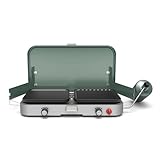
For your camp kitchen, consider a reliable camping stove to safely prepare and cook meals away from your tent.
6. Manage your water.
- What to do: Filter or treat any water you collect from natural sources. Store potable water in clean containers.
- What “good” looks like: You have a reliable supply of safe drinking water.
- Common mistake: Drinking untreated water from the river or streams. Giardia and other nasty bugs are no fun.
7. Secure your food and scented items.
- What to do: Store all food, trash, and anything with a scent (like toothpaste or deodorant) in bear-resistant containers or hang it properly from a tree.
- What “good” looks like: Your camp is clean and odor-free, making it unappealing to wildlife.
- Common mistake: Leaving food scraps or wrappers lying around. This teaches animals to associate humans with food, which is dangerous for both you and them.
8. Plan for waste disposal.
- What to do: Pack out all trash. If you need to dispose of human waste, dig a cathole at least 6-8 inches deep and 200 feet from water, camp, and trails.
- What “good” looks like: Your campsite is left cleaner than you found it.
- Common mistake: Burying toilet paper or leaving food waste. This pollutes the environment and attracts animals.
9. Prepare your fire (if permitted).
- What to do: If fire restrictions allow, use an existing fire ring. Keep the fire small and manageable. Have water and a shovel nearby.
- What “good” looks like: A controlled, safe campfire that you can easily extinguish.
- Common mistake: Building a fire ring where none exists, or leaving a fire unattended.
10. Enjoy the river!
- What to do: Fish, relax, hike, or just listen to the water.
- What “good” looks like: You’re having a safe and enjoyable time connecting with nature.
- Common mistake: Getting complacent and taking unnecessary risks near fast-moving water or in unfamiliar terrain.
Common mistakes (and what happens if you ignore them)
| Mistake | What it causes | Fix |
|---|---|---|
| Ignoring fire restrictions | Fines, destruction of property, wildfires, ecological damage | Always check current restrictions; have a backup plan that doesn’t involve open flames. |
| Not checking road conditions | Getting stuck, vehicle damage, stranded, costly tow bills | Use MVUMs, call ranger stations, talk to locals, have appropriate vehicle for the terrain. |
| Improper food storage | Attracting bears and other wildlife, potential encounters, habituated animals | Use bear canisters or proper bear hangs; keep a clean camp; store all scented items. |
| Camping too close to water | Water contamination, erosion, damage to riparian areas | Camp at least 200 feet from streams, lakes, and rivers. |
| Leaving trash behind | Polluted landscapes, harm to wildlife, negative impacts on future visitors | Pack it in, pack it out. Leave your campsite cleaner than you found it. |
| Not having a water plan | Dehydration, illness, reliance on questionable sources | Bring all the water you need or have a reliable filtration/purification system. |
| Not telling anyone your plans | Delayed rescue if something goes wrong, increased risk | Leave a detailed itinerary with a trusted person, including route and return date. |
| Disregarding “widowmaker” trees | Serious injury or death from falling branches | Scout your campsite for overhead hazards and choose a safer location. |
| Using unmarked trails or creating new ones | Habitat fragmentation, erosion, damage to sensitive plants | Stick to established trails and roads; follow MVUMs for legal travel. |
| Not respecting wildlife distance | Stressing animals, potential aggression, habituation, disease transmission | Observe wildlife from a distance; never feed them; secure your food. |
| Ignoring weather changes | Unexpectedly difficult conditions (rain, snow, wind), hypothermia, flash floods | Check forecasts for both your location and potential routes; be prepared to change plans. |
| Improper disposal of human waste | Water contamination, spread of disease, unsightly campsites | Dig catholes 6-8 inches deep, 200 feet from water/camp/trails, or pack out waste when required. |
Decision rules (simple if/then)
- If the fire danger is high, then do not have any open fires because it’s a major wildfire risk.
- If you are in a sedan, then stick to paved roads or well-maintained gravel roads because high-clearance or 4WD is likely needed for forest service roads.
- If you see bear tracks or scat, then double-check your food storage and camp cleanliness because wildlife is active in the area.
- If the weather forecast shows significant rain or snow, then check road conditions and be prepared for mud or ice because access can change rapidly.
- If you plan to camp dispersed, then consult the MVUM for legal camping areas because camping outside designated zones can result in fines.
- If you are fishing, then have a current Washington fishing license because fishing without one is illegal.
- If you are unsure about a road’s condition, then call the local ranger district first because they have the most up-to-date information.
- If you are in an area with limited cell service, then carry a satellite communicator because it’s crucial for emergencies.
- If you are near a river, then be aware of changing water levels and currents because conditions can be dangerous, especially during spring runoff.
- If you encounter an animal, then give it plenty of space and do not feed it because it’s for your safety and the animal’s well-being.
- If you are in a popular camping area during peak season, then expect crowds and plan for noise because you’re not the only one who loves the Methow.
- If you are packing out trash, then include all food scraps and packaging because even small items degrade the environment.
FAQ
Q: Is dispersed camping allowed near the Methow River?
A: Yes, dispersed camping is generally allowed in many areas of the Okanogan-Wenatchee National Forest, but you must follow Leave No Trace principles and camp in designated areas as shown on the MVUM. Always check for specific restrictions.
Q: What is the best time of year to camp near the Methow River?
A: Late spring through early fall is generally best. May and June can still have snow at higher elevations, while late fall can bring colder temperatures and early snow. Summer is popular but can be hot and dry.
Q: Do I need a permit to camp in the Okanogan-Wenatchee National Forest?
A: For dispersed camping, typically no permit is required unless there are specific area closures or restrictions. For developed campgrounds, reservations or fees may apply. Always check the forest service website.
Q: What kind of wildlife should I expect to see?
A: You might see deer, elk, bears (black bears are common), coyotes, and various birds. Be prepared for wildlife encounters by storing food properly and keeping a clean camp.
Q: Can I have a campfire?
A: It depends entirely on current fire restrictions. Always check the Okanogan-Wenatchee National Forest website for the most up-to-date information before you go. If fires are allowed, use existing fire rings and be extremely careful.
Q: Is the Methow River safe for swimming?
A: The river can be swift and cold, especially during spring runoff. Always assess conditions carefully. Swimming is generally safer in slower-moving sections or calmer pools, but be aware of submerged objects and currents.
Q: What if I get lost or have an emergency?
A: Because cell service is unreliable, it’s essential to tell someone your itinerary. For emergencies, a satellite messenger or personal locator beacon (PLB) is highly recommended for remote areas.
Q: Are there any specific regulations for fishing on the Methow River?
A: Yes, you’ll need a valid Washington State fishing license. The Methow River has specific fishing regulations for different species and sections, including catch-and-release areas and seasonal closures. Check the Washington Department of Fish and Wildlife website.
What this page does NOT cover (and where to go next)
- Specific campground reservation details and fees. (Check the USFS website for the specific campground.)
- Detailed trail descriptions or hiking routes. (Look for local hiking guides or trail apps.)
- In-depth information on specific fish species or fishing techniques. (Consult fishing forums or local guides.)
- Permits for commercial activities or special events. (Contact the relevant land management agency directly.)
- Detailed geological history of the Methow River valley. (Explore local historical societies or geological surveys.)

Camping Bob has spent over 20 years camping across the US — from BLM dispersed sites in the Southwest to KOA campgrounds in the Pacific Northwest. He writes practical, no-nonsense guides to help fellow campers get outdoors with confidence.