
Folding a Pop-Up Tent Into a Compact Circle
Quick answer
- Get the frame flat. This is key.
- Fold it in half, then in half again. Think pizza slices.
- Twist the frame. This is the magic move.
- Secure it with the straps. Don’t let it spring open.
- Stuff it in the bag. It should fit snugly.
- Practice makes perfect. Seriously, just do it a few times.
What to check first (do this before you drive out)
Before you even think about packing, a few things need a once-over. It’s not just about the tent; it’s about the whole adventure.
- Land manager / legality: Who owns this patch of dirt? Is it National Forest, BLM, a state park, or private land? Each has its own rules. A quick check on their website or a call can save you a headache. I learned that lesson the hard way camping on what I thought was open range. Turns out, it was a working ranch. Oops.
- Access/road conditions: Can your rig actually get there? Is it a paved road, or are we talking washboard gravel? Some pop-ups are easy to set up, but getting to them can be the real challenge. Check recent reports if you can, especially after rain or snow.
- Fire restrictions + weather + wind: This is non-negotiable. Are campfires allowed? What about stoves? Check the local fire danger level. Also, look at the forecast. High winds can turn a breezy setup into a wrestling match.
- Water plan + waste plan (Leave No Trace): Where’s your water coming from? Are you packing it all in, or is there a potable source? And what about trash and human waste? Pack it in, pack it out. Always.
- Safety (wildlife, distance to help, comms): Know what critters are in the area. Bears? Snakes? Be prepared. How far is the nearest ranger station or town? And can you get a cell signal? A satellite messenger is a good idea for remote spots.
Step-by-step (field workflow)
Alright, let’s get this tent packed. It’s less of a “fold” and more of a “collapse and coax.”
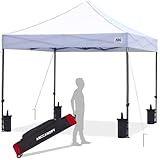
Before you start, make sure you have a reliable pop-up tent designed for easy folding. A good quality tent will make this process much smoother.
1. Clear the inside: Make sure all your gear, sleeping bags, and anything else is out of the tent. You want a clean slate.
- Good looks like: A completely empty tent floor.
- Common mistake: Leaving your favorite camp pillow inside. It’ll just get in the way.
2. Find the poles: Most pop-ups have internal sprung poles. Locate where they are hinged.
- Good looks like: You can see the structure and how it flexes.
- Common mistake: Not understanding how the poles are connected. You’ll fight it.
3. Collapse one side: Push one side of the tent frame inward, collapsing it. It’s like folding a screen door.
- Good looks like: One side is significantly flatter than the other.
- Common mistake: Trying to collapse both sides at once. Work one at a time.
4. Collapse the second side: Now do the same for the other side. The tent should be getting flatter.
- Good looks like: The entire tent is now a flattened, irregular shape.
- Common mistake: Forcing it. If it’s not going, check if you missed a hinge.
5. Bring the two halves together: Grab the flattened tent and bring the two collapsed sides towards each other. It’ll start to form a rough circle or oval.
- Good looks like: The tent is now in a more compact, rounded form.
- Common mistake: Not bringing the edges close enough. This makes the next step harder.
6. Twist the frame: This is the crucial part. Hold the collapsed tent with both hands and twist. One hand goes one way, the other goes the opposite. Think of wringing out a towel, but with the tent frame.
- Good looks like: The frame naturally wants to coil into a tighter circle.
- Common mistake: Not twisting hard enough, or twisting in the wrong direction. It takes a little finesse.
7. Form the circle: Keep twisting until the frame naturally forms a compact circle. The fabric will bunch up around it.
- Good looks like: A neat, flat circle, maybe 2-3 feet across.
- Common mistake: Giving up too soon. Keep twisting; it’ll click into place.
8. Secure the straps: Most pop-up tents come with straps. Loop these around the folded circle to keep it from springing open.
- Good looks like: The circle is held tightly and won’t expand.
- Common mistake: Not using the straps, or not tightening them enough. This leads to a rogue tent explosion in your car.
9. Stuff into the bag: Wrestle the folded circle into its carrying bag. It might take a bit of shoving.
- Good looks like: The tent is fully inside the bag, and the drawstring/zipper closes.
- Common mistake: Trying to force it if it’s not fitting. Re-fold slightly to make it more compact.
10. Pack it away: Store the bag somewhere secure in your vehicle.
- Good looks like: It’s not rolling around and getting damaged.
- Common mistake: Leaving it loose where it can get punctured or unfolded.
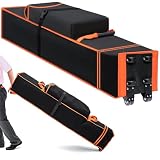
Once your tent is neatly folded, ensure you have a durable pop up tent carrying bag to protect it during transport and storage. A sturdy bag is essential for keeping your tent safe.
Common mistakes (and what happens if you ignore them)
| Mistake | What it causes | Fix |
|---|---|---|
| Not clearing all gear from the tent | Tent won’t collapse flat, can damage gear or tent fabric | Double-check the inside before you start folding. |
| Forcing the poles to bend | Bent or broken poles, making the tent useless | Understand the hinge points and let the spring action do the work. |
| Trying to fold both sides at once | Uneven collapse, makes the twist harder and less effective | Collapse one side fully, then the other. |
| Not twisting hard enough | Tent remains bulky and won’t form a compact circle | Get a good grip and twist with conviction; it’s a frame flex, not a tear. |
| Not using the securing straps | Tent springs open unexpectedly, taking up space and potentially getting damaged | Always use the straps and tighten them firmly. |
| Overstuffing the carrying bag | Rips in the bag, difficult to close, can damage the tent | Refold the tent to be more compact if it’s not fitting easily. |
| Storing the tent improperly after folding | Punctures, UV damage, mildew if stored damp | Store in its bag, in a dry place, preferably not under heavy objects. |
| Not practicing at home | Frustration and wasted time at the campsite | Do it once or twice in your living room or backyard before your trip. |
| Ignoring the fabric bunching | Can create stress points on the fabric or seams | Gently smooth out the fabric as you fold, allowing it to bunch naturally. |
Decision rules (simple if/then)
- If the tent is still wet, then air dry it completely before packing to prevent mildew, because mildew is a tent killer.
- If you’re in a windy spot, then get a helper to hold the tent down while you fold, because the wind can grab it like a kite.
- If the poles feel stiff, then check for dirt or debris in the hinges, because grit can make them hard to move.
- If the tent won’t twist into a circle, then check if you brought the sides together properly, because the twist needs the structure to be aligned.
- If the carrying bag is torn, then consider reinforcing it with duct tape or looking for a replacement, because a damaged bag won’t protect your tent.
- If you’re struggling, then watch a video of your specific tent model being folded, because visual guides are super helpful.
- If you’re packing for a car camping trip, then you have a bit more leeway with bulk, but for backpacking, every inch counts.
- If the tent is old and the elastic in the poles is shot, then you might need to manually secure it with more straps or bungee cords, because the springs might not hold it together anymore.
- If you’ve got a giant family-sized pop-up, then expect it to be a bit more of a workout, because bigger means more material and frame to manage.
- If you want to make it easier next time, then pack it up the same way you took it down, because consistency builds muscle memory.
If you’re still struggling with your current pop-up tent, consider upgrading to a model known for its user-friendly folding mechanism. Some pop-up tents are designed with even simpler twist-and-fold systems.
FAQ
How do I know which way to twist the frame?
Usually, you’ll twist it so the two main frame sections overlap each other. It feels like you’re trying to make a pretzel.
What if my tent doesn’t come with straps?
No sweat. You can use Velcro strips, bungee cords, or even just some sturdy rope to hold the folded circle together. Just make sure it’s secure.
Is there a trick to getting it back in the bag?
Sometimes you have to wiggle and shove a bit. Try to get the bulk of the frame settled in first, then coax the fabric around it.
My tent feels bulky even when folded. Is that normal?
For most pop-ups, yes. They’re designed for quick setup, not necessarily ultralight packing. It’ll still be bulkier than a traditional tent of the same size.
Can I fold it in the rain?
You can, but it’s not ideal. If you must, try to get it as dry as possible afterward to prevent mold. A quick shake and wiping with a towel helps.
What if I bend a pole trying to fold it?
This usually means you’re forcing it. The poles are designed to flex and spring. If a pole feels stuck, re-examine how the frame is collapsing.
How long should this take once I get the hang of it?
Once you’ve done it a few times, you should be able to fold and bag most pop-up tents in under two minutes.
Does the brand of pop-up tent matter for folding?
Generally, no. The basic principle of collapsing the sprung frame is the same across most brands. Some might have slightly different hinge designs, but the twist is universal.
What this page does NOT cover (and where to go next)
- Detailed repair guides for damaged tent poles or fabric.
- Specific campsite reservation systems or fees.
- In-depth wilderness survival techniques.
- Choosing the right size tent for your group.
- Advanced weather forecasting or interpretation.

Camping Bob has spent over 20 years camping across the US — from BLM dispersed sites in the Southwest to KOA campgrounds in the Pacific Northwest. He writes practical, no-nonsense guides to help fellow campers get outdoors with confidence.