
Estimating Propane Canister Lifespan
Quick answer
- A standard 1lb propane canister typically lasts 1.5 to 2 hours of continuous burn time for a stove.
- Burn time depends heavily on the appliance’s BTU output and flame setting.
- Colder weather drains canisters faster due to pressure changes.
- Always carry a spare, especially for longer trips or colder conditions.
- Check canister weight to estimate remaining fuel.
- Propane isn’t cheap; conserve fuel where you can.
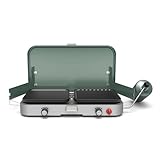
For a reliable cooking experience, consider a high-quality portable camping stove that offers efficient burn times and easy setup.
What to check first (do this before you drive out)
Before you head out, a few quick checks can save you headaches.
- Land manager / legality: Who owns this patch of dirt? Is it US Forest Service, BLM, a state park, or private land? Each has its own rules, especially for campfires and dispersed camping. Knowing who’s in charge means knowing the rules. Always check the official website for the specific area.
- Access/road conditions: Can your rig actually get there? Is it a paved road, or are we talking washboard dirt and potential mud? Know your vehicle’s limits – 2WD, AWD, or 4×4? What’s your ground clearance like? Don’t be the guy stuck miles from anywhere because you didn’t check the road report.
- Fire restrictions + weather + wind: This is a big one. Are campfires banned? Are stoves okay? Check the local fire restrictions religiously. Then, look at the weather forecast. High winds can make cooking miserable and dangerous. Extreme cold can affect propane performance.
- Water plan + waste plan (Leave No Trace): Where are you getting water? Bring enough or know how to treat it. And what about trash? Pack it in, pack it out. Nobody wants to see your discarded wrappers on a beautiful trail. Leave it better than you found it.
- Safety (wildlife, distance to help, comms): What kind of critters are in the area? Be bear aware, or whatever else might be lurking. How far is the nearest town or ranger station? Do you have cell service? A satellite messenger is a good backup for remote spots.
Step-by-step (field workflow)
Getting your camp stove dialed in is pretty straightforward.
To ensure your outdoor cooking is seamless, start with a dependable portable camping stove. This guide will help you get the most out of it.
1. Inspect the canister: Look for dents, rust, or any obvious damage.
- Good: Clean, intact canister.
- Mistake: Using a damaged canister. It’s a safety risk. Toss it.
2. Check the valve: Make sure the threads are clean and the valve seals properly.
- Good: Valve screws on smoothly, no leaks.
- Mistake: Forcing a dirty or damaged valve. You could strip the threads or cause a leak.
3. Attach the stove: Screw the stove onto the canister firmly.
- Good: Snug fit, no wobbling.
- Mistake: Not tightening it enough. This is a prime spot for leaks.
4. Turn on the gas: Slowly open the valve on the canister or stove.
- Good: You hear a faint hiss, indicating gas flow.
- Mistake: Opening it too fast. You might not hear a leak over the rush of gas.
5. Light the stove: Use a long lighter or the stove’s igniter.
- Good: A steady blue flame.
- Mistake: Holding the lighter too close. You might burn your knuckles.
6. Adjust the flame: Dial it down to simmer or up for a rolling boil.
- Good: Controlled flame that suits your cooking needs.
- Mistake: Running it on high constantly. This burns fuel way faster than necessary.
7. Cook your meal: Enjoy the fruits of your labor.
- Good: Hot food, happy camper.
- Mistake: Trying to cook a Thanksgiving turkey on a tiny stove. Be realistic.
A good portable camping stove makes all the difference for a hot meal outdoors. Choose one that balances power and fuel efficiency for your adventures.
8. Turn off the gas: Close the valve on the canister or stove completely.
- Good: Flame extinguishes immediately.
- Mistake: Leaving the valve slightly open. You’ll lose fuel.
9. Disconnect the stove: Once the stove is cool, unscrew it from the canister.
- Good: Easy removal, no residual gas smell.
- Mistake: Disconnecting a hot stove. It’s uncomfortable and could be a minor burn risk.
10. Store the canister: Keep it in a cool, dry place.
- Good: Safe storage until next use.
- Mistake: Leaving it in a hot car. High temps increase pressure.
Common mistakes (and what happens if you ignore them)
| Mistake | What it causes | Fix |
|---|---|---|
| Using a damaged canister | Leaks, fire hazard, potential explosion. | Inspect all canisters before use. If damaged, dispose of it safely according to local guidelines. |
| Not tightening the stove connection | Propane leaks, wasted fuel, potential fire hazard. | Screw the stove on firmly until snug. Perform a leak test with soapy water if unsure. |
| Leaving the gas valve slightly open | Slow, constant fuel leak, potentially emptying the canister overnight. | Ensure the valve is fully closed after use. |
| Running the stove on high constantly | Rapid fuel depletion, shorter trip duration, unnecessary expense. | Use the lowest effective flame setting for your cooking needs. Simmering uses much less fuel than a raging boil. |
| Not accounting for cold weather | Reduced canister pressure, weaker flame, faster fuel consumption. | Keep canisters warm by storing them in a sleeping bag or jacket. Be prepared to use more fuel than estimated in cold conditions. |
| Relying on a single, nearly empty canister | Running out of fuel mid-meal or mid-trip, forcing a cold dinner or an early departure. | Always carry a spare canister. Check the weight of your current canister to gauge remaining fuel. |
| Forgetting to check fire restrictions | Fines, potential wildfire, getting kicked out of your campsite. | Always check official land manager websites for current fire bans before heading out. |
| Using the stove in an enclosed space | Carbon monoxide poisoning risk, potential suffocation. | Always use propane stoves in well-ventilated outdoor areas. Never use them inside a tent or vehicle. |
| Not performing a leak test | Unnoticed leaks can lead to wasted fuel or a dangerous fire. | After connecting, apply a soapy water solution to the connection. Bubbles indicate a leak. |
| Storing canisters improperly | Degradation of seals, increased pressure in hot conditions, potential leaks. | Store in a cool, dry, well-ventilated area away from direct sunlight or heat sources. |
Decision rules (simple if/then)
- If your trip is longer than two days, then carry at least two 1lb canisters because one might not be enough, and running out is a bummer.
- If you’re cooking in freezing temperatures, then expect your canister to last less than its rated time because cold makes the gas less efficient.
- If you can hear or smell gas after connecting the stove, then immediately disconnect and check the connection because you have a leak.
- If the flame on your stove is weak and yellow, then your canister is likely low on fuel because propane pressure drops as the fuel level decreases.
- If you’re boiling water for a large group, then use a larger pot and a slightly higher flame because efficiency matters, but don’t go full blast unnecessarily.
- If you’re unsure about the remaining fuel, then weigh the canister because a full 1lb canister weighs about 1.1 lbs (500g), and an empty one is around 0.7 lbs (320g).
- If you’re planning a minimalist trip, then consider a larger refillable propane cylinder with an adapter for your stove because it’s more cost-effective long-term.
- If you notice significant rust or dents on a canister, then do not use it because it could be compromised and unsafe.
- If you’re planning a trip in extreme heat, then keep canisters out of direct sun because high temperatures increase internal pressure.
- If you’re using a stove with a high BTU rating, then expect it to burn through fuel faster because more power means more gas consumption.
- If you’re just heating water for coffee, then use the lowest setting that works because you don’t need a roaring inferno for a single cup.
- If you’re packing out, then ensure the canister valve is fully closed and the stove is cool before disconnecting and storing.
FAQ
How long does a typical 1lb propane canister last?
A standard 1lb canister usually lasts between 1.5 to 2 hours of continuous burn time on a medium flame. This can vary significantly based on your stove and conditions.
The lifespan of your propane canister is directly tied to your portable camping stove’s efficiency. Investing in a quality stove can optimize your fuel usage.
What factors affect how long a propane canister lasts?
The main factors are the appliance’s BTU output (how powerful it is), the flame setting you use, and ambient temperature. Colder weather reduces efficiency.
Can I refill a 1lb propane canister?
No, these small canisters are designed for single use and are not meant to be refilled. It’s unsafe and often illegal to attempt refilling them.
How can I tell how much propane is left in a canister?
The best way is to weigh it. A full 1lb canister weighs around 1.1 lbs (500g), and an empty one is about 0.7 lbs (320g). You can also feel the temperature difference: a nearly empty canister will be colder at the top.
Is it safe to use a propane stove inside a tent?
Absolutely not. Propane stoves produce carbon monoxide, which is odorless and deadly. Always use them in well-ventilated outdoor spaces.
What should I do with empty propane canisters?
Proper disposal is key. Many outdoor retailers have recycling programs for them. Check with your local waste management or outdoor gear shop for options.
Does cold weather really make propane last less time?
Yes, it does. Cold temperatures lower the vapor pressure of the propane inside the canister, making it harder for the gas to come out and sustain a strong flame.
Are there alternatives to 1lb canisters for longer trips?
Yes, many backpacking stoves can use larger, refillable propane cylinders or specialized fuel cartridges that offer more fuel for extended trips.
What this page does NOT cover (and where to go next)
- Detailed BTU ratings for specific stove models.
- Advanced fuel conservation techniques for expedition-level trips.
- Repair or maintenance of propane stoves themselves.
- Specific recommendations for refillable propane cylinder adapters.
- Regulations for transporting large quantities of propane.