
Effective Use of Tent Guy Ropes for Stability
Quick answer
- Guy ropes are your tent’s best friend in wind.
- Learn to tension them right, not too tight, not too loose.
- Use all the guy-out points your tent offers.
- Anchor them solid, not just on a twig.
- Position your tent smart, using natural windbreaks.
- Practice at home before you need ’em.
What to check first (do this before you drive out)
Before you even think about hitting the trail, do a quick gear check and some intel gathering. This saves you a ton of hassle when you’re already out there.
- Land manager / legality
Who’s in charge? Is it National Forest, BLM, a state park, or private land? Different folks have different rules. Know who manages the area you’re headed to. This is key for understanding fire bans, dispersed camping rules, and any other regulations.
- Access/road conditions
Can your rig actually get there? Check if the road is paved, gravel, or just a suggestion of a path. If you’re in a 2WD sedan, a rough forest road might be a no-go. High-clearance or 4WD might be needed. Mud and snow can change everything.
- Fire restrictions + weather + wind
This is a big one for tent stability. Check the local fire danger level. Are campfires allowed? Are there burn bans? Then, look at the forecast. Not just rain, but wind speed and direction. High winds are where guy ropes earn their keep.
- Water plan + waste plan (Leave No Trace)
Where will you get water? Is there a reliable source, or do you need to pack it all in? Also, how will you handle waste? Pack it out is the general rule, especially in sensitive areas. Plan for grey water disposal too.
- Safety (wildlife, distance to help, comms)
What critters are in the area? Know how to store food and manage waste to avoid unwanted visitors. How far is the nearest ranger station or town? Do you have cell service? A satellite messenger or knowing how to signal for help is smart.
Step-by-step (how to use tent guy ropes)
Let’s break down how to get those ropes working for you. It’s not rocket science, but a little finesse goes a long way.
1. Unpack and orient your tent.
- What to do: Lay out your tent body and fly. Figure out which way is the front, back, and sides.
- What “good” looks like: You can easily identify the door and the fly’s orientation.
- Common mistake: Trying to pitch in the dark or wind without knowing which way is which. Avoid this by doing a quick setup in daylight or at home first.
2. Stake out the tent body.
- What to do: Stake down the corners of the tent body first.
- What “good” looks like: The tent body is taut and square, not sagging anywhere.
- Common mistake: Staking too tightly, which can warp the poles or fabric. Leave a little slack until the fly is on.
3. Drape the fly over the tent.
- What to do: Carefully place the rainfly over the tent body, ensuring it’s oriented correctly.
- What “good” looks like: The fly covers the tent evenly, with no snags or misalignments.
- Common mistake: Rushing and getting the fly twisted or inside-out. Take your time.
4. Attach the fly to the tent poles.
- What to do: Secure the fly to the pole ends or clips as per your tent’s design.
- What “good” looks like: The fly is snug against the poles and the tent body.
- Common mistake: Forgetting to attach some of the clips, leading to a loose fly. Double-check all attachment points.
5. Locate the guy-out loops.
- What to do: Find all the loops on the rainfly designed for guy ropes.
- What “good” looks like: You’ve identified every single guy-out point.
- Common mistake: Missing loops on the sides or back, leaving those areas unsupported.
6. Attach guy ropes to the loops.
- What to do: Tie or clip your guy ropes to these loops. Use a secure knot like a bowline if tying.
- What “good” looks like: Ropes are attached firmly and ready to be tensioned.
- Common mistake: Using flimsy knots that can slip. Practice your knots.
7. Stake out the main guy lines.
- What to do: Extend the guy ropes outwards at roughly a 45-degree angle from the tent seam. Stake them firmly into the ground.
- What “good” looks like: The fly is pulled taut, creating space between the fly and the tent body.
- Common mistake: Staking too close to the tent, which doesn’t provide enough tension or support. Aim for a good distance.
Ensure your tent is firmly anchored by using reliable camping tent stakes. Good stakes are crucial for holding your guy lines securely in various ground conditions.

8. Adjust tension with guy line adjusters.
- What to do: Use the plastic or metal adjusters on the ropes to tighten them.
- What “good” looks like: The fly is taut and stable, but not so tight that it strains the poles or fabric. You should be able to press the fly gently and feel some give.
- Common mistake: Over-tightening. This puts undue stress on your tent and can damage poles or fabric. It can also make the tent less forgiving in strong gusts.
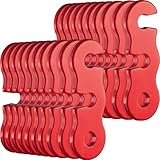
For optimal tensioning, consider upgrading to durable guy line tensioners. They make adjusting your lines quick and secure, ensuring your tent stays taut.
9. Use additional guy lines if available.
- What to do: If your tent has extra guy-out points, use them, especially in windy conditions.
- What “good” looks like: All available guy-out points are utilized for maximum stability.
- Common mistake: Thinking you only need the main ones. More support is always better in bad weather.
10. Check and re-tension as needed.
- What to do: Periodically check your guy lines, especially after a few hours or if the wind picks up.
- What “good” looks like: The tent remains taut and stable throughout the night.
- Common mistake: Setting it and forgetting it. Ground can shift, ropes can stretch or loosen.
Common mistakes (and what happens if you ignore them)
| Mistake | What it causes | Fix |
|---|---|---|
| Not using guy ropes at all | Tent collapses in wind, leaks, poles can break. | Always deploy and tension guy ropes, especially in windy or exposed conditions. |
| Staking guy ropes too close to tent | Insufficient tension, fly sags, poor ventilation, water can pool. | Stake guy lines out at a 45-degree angle from the tent seam, at least 1-2 feet away. |
| Over-tightening guy ropes | Strains poles and fabric, can cause tears, makes tent less forgiving in wind. | Tension until taut, but with a slight give. You shouldn’t be able to pull the fly taut like a drum. |
| Under-tightening guy ropes | Loose fly flaps, reduces wind resistance, can still leak, noisy. | Adjust tensioners until the fly is firm but not stretched. |
| Missing guy-out points | Weak spots in the tent’s structure, fly can flap excessively. | Identify and use <em>all</em> guy-out points provided by the tent manufacturer. |
| Staking into poor ground (e.g., sand) | Stakes pull out, tent becomes unstable, collapses. | Use larger “sand” stakes, bury stakes horizontally, or use rocks/logs to anchor ropes. |
| Not checking tension overnight | Ropes loosen due to ground changes or temperature, leading to saggy tent. | Make a habit of checking and re-tensioning guy lines before bed and in the morning. |
| Using frayed or damaged guy ropes | Rope can snap under tension, leading to tent failure. | Inspect all ropes for wear and tear; replace them if damaged. |
| Not pitching tent into the wind | Tent takes the full brunt of the wind, guy ropes are less effective. | Orient your tent’s narrowest profile into the prevailing wind direction. |
| Guy ropes interfering with zippers | Annoying to get in/out, can snag zippers, potentially damage fabric. | Position guy lines so they don’t obstruct doors or vents. |
Decision rules (simple if/then)
- If the forecast calls for sustained winds over 15 mph, then deploy all guy lines because they are critical for stability.
- If you are camping in an open, exposed area, then use extra guy lines and stakes because natural windbreaks are absent.
- If the ground is soft, sandy, or rocky, then use specialized stakes or anchor points (like rocks/logs) because standard stakes will likely pull out.
- If you are setting up your tent for the first time, then do a practice run at home in calm conditions because you need to understand your tent’s setup and guy-out system.
- If you notice your tent fly sagging during the night, then check and re-tension your guy lines because ground can shift and ropes can loosen.
- If you are in a high-wind area, then orient your tent’s narrowest profile into the wind because this presents less surface area to the gusts.
- If your tent has multiple guy-out points on a single pole line, then use them all in windy conditions because redundancy equals strength.
- If you are unsure about the tension, then err on the side of slightly looser rather than too tight because over-tensioning damages gear.
- If you are camping near water, then be aware that wind can pick up suddenly and dramatically, so always be prepared with taut guy lines.
- If you are using a single-wall tent, then ensure the fly is well-tensioned with guy ropes to maintain interior space and prevent condensation buildup.
- If you have a freestanding tent, then you can pitch it without stakes, but in wind, you must stake it down and use guy lines.
- If you are camping in a thunderstorm, then ensure your guy lines are securely anchored, but avoid staking directly under tall, isolated trees.
FAQ
Q: How tight should my tent guy ropes be?
A: They should be taut enough to eliminate sagging in the rainfly, but not so tight that they put significant strain on your tent poles or fabric. You want them firm, but with a slight give.
Q: What are guy-out loops for?
A: These are the fabric tabs on your rainfly designed specifically for attaching guy ropes. They distribute tension and help keep the fly taut and stable.
Q: Can I use rocks to anchor my guy ropes?
A: Yes, in some situations. If stakes won’t hold, you can tie guy ropes to large rocks or logs. Just ensure the knot is secure and the anchor is stable.
Q: My tent came with extra cord. What’s that for?
A: That’s likely extra guy line or cordage. You can use it to reinforce existing guy lines or create additional anchor points if needed, especially in severe weather.
Q: What happens if I don’t use guy ropes in the wind?
A: Your tent will likely flap violently, potentially damage poles or fabric, leak water, and could even collapse. It’s a quick way to ruin your trip and your gear.
Q: How do I prevent condensation inside my tent?
A: Proper ventilation and ensuring the rainfly is taut with adequate space between it and the tent body (which guy ropes help achieve) are key. Guy ropes help maintain that crucial airflow.
Q: Do I need guy ropes for a freestanding tent?
A: A freestanding tent can stand on its own, but in windy conditions, you absolutely need to stake it down and use guy ropes for stability. They prevent the tent from blowing away or collapsing.
What this page does NOT cover (and where to go next)
- Specific tent repair techniques (e.g., patching tears, replacing zippers).
- Detailed knot-tying tutorials beyond basic recommendations.
- In-depth reviews of specific tent models or guy rope materials.
- Advanced backcountry shelter construction beyond standard tent setup.
- Navigation and route planning for remote camping.
- Wildlife encounter protocols (beyond basic food storage advice).

Camping Bob has spent over 20 years camping across the US — from BLM dispersed sites in the Southwest to KOA campgrounds in the Pacific Northwest. He writes practical, no-nonsense guides to help fellow campers get outdoors with confidence.