
Determining Propane Tank Size: What You Need to Know
Quick answer
- Most RVs use 20-pound (5-gallon) tanks.
- Larger campers or those running more appliances might need 30-pound or 40-pound tanks.
- Propane tank size is measured by weight (pounds) or capacity (gallons).
- Check your RV’s existing tank size or the manufacturer’s recommendations.
- Calculate your appliance usage to estimate how much propane you’ll burn.
- Always have a spare tank or a plan for refills.
For those with larger campers or more appliances, a 30-pound propane tank like this one might be a better fit to ensure you have enough fuel.
What to check first (do this before you drive out)
Before you even think about hitting the road, a little prep work saves a lot of headaches. Especially when it comes to keeping the lights on and the stove hot.
- Land manager / legality: Who actually owns the dirt you’re parking on? This is usually the US Forest Service (USFS), Bureau of Land Management (BLM), National Park Service (NPS), or a state park system. They set the rules. Some areas might have specific restrictions on propane use, especially in fire-prone zones. Always check the official website for the specific area you’re headed to.
- Access/road conditions: Is that “road” to your primo campsite actually a goat path? Know your rig’s capabilities. A Subaru Outback isn’t a rock crawler. If the road is rough, narrow, or unpaved, you might need 4WD or high clearance. Mud and snow are their own beasts. Don’t find out you’re stuck miles from anywhere because you underestimated the trail.
- Fire restrictions + weather + wind: Propane is flammable. Obvious, right? During dry seasons, fire bans are common. Check the local land manager’s site for current restrictions. Also, know the forecast. High winds can make cooking tricky and increase fire risk. A sudden storm can ruin a trip, but at least you’ll be prepared.
- Water plan + waste plan (Leave No Trace): Propane powers your stove and maybe your fridge, but you still need water for drinking, cooking, and cleaning. And what about your grey and black water? Plan where you’ll get potable water and where you can legally dump your tanks. Leave No Trace principles are key here. Pack it in, pack it out.
- Safety (wildlife, distance to help, comms): You’re in their house now. Know what wildlife is common in the area and how to store your food safely. How far is the nearest town or ranger station? Cell service is often spotty. Tell someone where you’re going and when you expect to be back. A satellite messenger can be a lifesaver.
Step-by-step (field workflow)
Alright, you’ve done your homework. Now, let’s get that propane situation dialed in for your trip.
1. Identify your appliances: What runs on propane in your camper? Stove, oven, fridge, water heater, furnace?
- Good looks like: You know exactly which appliances you’ll be using.
- Common mistake: Forgetting the furnace or water heater, then running out of heat on a cold night. Always do a full inventory.
2. Check existing tank size: If you have an RV, look at the tanks already mounted. They usually have a label indicating their size in pounds.
- Good looks like: You can clearly read the size stamped on the tank.
- Common mistake: Assuming all tanks are the same size. They’re not. Measure or find the label.
3. Consult RV manual/manufacturer: Your RV’s manual or the manufacturer’s website will often specify the recommended tank size for your model.
- Good looks like: You have the official word on what your rig was designed for.
- Common mistake: Relying on what a previous owner told you. Specs are king.
4. Estimate daily consumption: This is the tricky part. Look up the BTU (British Thermal Unit) rating for each propane appliance.
- Good looks like: You have a list of BTUs for each appliance.
- Common mistake: Guessing. BTUs are actual measurements. Find them on the appliance or its manual.
5. Calculate total BTU usage per day: Multiply the BTU rating of each appliance by how many hours you expect to run it per day. Add them all up.
- Good looks like: A clear sum of your daily BTU burn.
- Common mistake: Overestimating usage. Be realistic. You won’t run the furnace on high all day.
6. Convert BTU to gallons: A general rule of thumb is that 1 gallon of propane produces about 92,000 BTUs.
- Good looks like: You’ve divided your total daily BTU usage by 92,000.
- Common mistake: Using a wildly different conversion factor. Stick to the standard.
7. Determine trip length: How many days will you be out camping?
- Good looks like: A firm number for your trip duration.
- Common mistake: Being vague. “A few days” isn’t helpful.
8. Calculate total propane needed: Multiply your estimated daily gallons by the number of days. Add a buffer of at least 25% for unexpected use or colder weather.
- Good looks like: A total gallon estimate, plus extra.
- Common mistake: Not adding a buffer. You’ll regret that.
9. Match needs to tank size: Propane tanks are sold by weight (pounds). A 20-pound tank holds about 4.7 gallons. A 30-pound tank holds about 7 gallons. A 40-pound tank holds about 9.4 gallons.
- Good looks like: You’ve chosen a tank size that comfortably holds your calculated needs.
- Common mistake: Buying the smallest tank because it’s cheaper. You’ll be refilling constantly.
10. Plan for refills/swaps: Know where the nearest propane refill stations or exchange locations are.
- Good looks like: You have a map or list of places to get more propane.
- Common mistake: Assuming you’ll find a refill station easily. Sometimes you’re in the middle of nowhere.
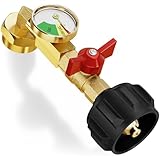
Having a propane refill adapter can be incredibly useful for topping off smaller tanks from a larger source, giving you more flexibility on the road.
Common mistakes (and what happens if you ignore them)
| Mistake | What it causes | Fix |
|---|---|---|
| Underestimating usage | Running out of propane mid-trip, especially during cold weather or heavy cooking. | Calculate usage carefully, add a buffer, and know refill locations. |
| Not checking existing tank size | Buying the wrong size replacement or not knowing what you have. | Visually inspect and read labels on your current tanks. |
| Ignoring appliance BTU ratings | Inaccurate consumption estimates, leading to running out of fuel. | Look up the BTU rating for each propane appliance. |
| Forgetting about furnace/water heater usage | Significant propane drain on cold nights or during extended hot water use. | Factor in the higher BTUs of heating and water heating appliances. |
| Not planning for refills | Stranded with no heat, hot water, or cooking fuel. | Research refill stations/exchange points before your trip. |
| Buying the smallest tank to save money | Frequent, inconvenient refills, and potential shortages. | Size your tank based on your estimated needs and trip length, not just initial cost. |
| Not checking fire restrictions | Fines, damage to the environment, or starting a wildfire. | Always check local fire restrictions with the land manager before you go. |
| Using old/damaged tanks | Leaks, potential explosions, or being rejected at refill stations. | Inspect tanks for damage, rust, or valve issues. Replace if compromised. |
| Incorrectly connecting tanks | Leaks, potential fire hazards, or appliance malfunction. | Ensure connections are secure and use the correct regulator and hoses. |
| Not considering weather | Increased propane use for heating in cold, or wind affecting cooking efficiency. | Factor in expected weather when calculating needs and adding a buffer. |
Decision rules (simple if/then)
- If your RV has a furnace and you’re camping in cooler months, then you need a larger propane tank or a plan for frequent refills because furnaces are big propane users.
- If you plan on cooking most meals at your campsite, then you’ll burn more propane than if you eat out or use a camp stove, so size your tank accordingly.
- If your RV fridge runs on propane, then factor that into your daily usage, especially if you’re not plugged into shore power.
- If you’re going on a long trip (over a week), then it’s wise to have at least one full spare tank or know where to refill on the road because running out is a major bummer.
- If you have multiple propane appliances running simultaneously, then your consumption rate will be much higher, so account for this peak usage.
- If you’re unsure about your exact usage, then err on the side of having too much propane rather than too little because running out can be a safety issue.
- If you’re swapping out tanks at an exchange station, then make sure the new tank is full before you leave the station.
- If your propane regulator seems old or worn, then consider replacing it along with your tank to ensure safe and efficient operation.
- If you’re only using propane for a small camp stove on short trips, then a single 20-pound tank is likely sufficient.
- If you’re boondocking for an extended period, then understanding your propane usage is critical to self-sufficiency.
FAQ
Q: How much propane does an RV fridge use?
A: An RV propane fridge typically uses about 1 to 1.5 pounds of propane per day. It’s a steady, consistent draw if it’s running on gas.
Q: What’s the difference between a 20-pound and a 30-pound propane tank?
A: A 20-pound tank holds about 4.7 gallons of propane, while a 30-pound tank holds about 7 gallons. The 30-pounder is taller and heavier.
If you’re considering upgrading from a 20-pound tank, a 30-pound propane tank offers significantly more capacity for longer trips.
Q: Can I use a larger propane tank than what came with my RV?
A: Generally, yes, as long as it fits the mounting bracket and your regulator is compatible. Check your RV’s specifications.
Q: How do I know if my propane tank is empty?
A: Most tanks don’t have a gauge. You can use a propane gauge tool, feel the side of the tank (it gets colder below the liquid line), or use warm water poured down the side to see where the condensation stops.
Q: Is it safe to transport propane tanks in my car?
A: It’s best to transport them securely in the bed of a truck or in a well-ventilated area of an SUV. Ensure they are upright and secured to prevent tipping.
Q: How often should I get my propane tanks refilled?
A: This depends entirely on your usage. A typical 20-pound tank might last a weekend for light use, or only a day or two for heavy use.
Q: What are BTUs and why do they matter for propane tanks?
A: BTUs measure heat output. Knowing the BTU rating of your appliances helps you calculate how much propane they consume, which directly impacts how long your tank will last.
Q: Can I use a BBQ tank on my RV?
A: A standard 20-pound BBQ tank is the same size as a standard RV propane tank. You can often use them interchangeably, but ensure your regulator and hoses are compatible.
What this page does NOT cover (and where to go next)
- Specific campsite rules: This page gives general guidance. For exact rules on propane use, fire bans, or waste disposal at a particular campground, you need to check the official website for that specific park or land manager.
- Propane tank maintenance and repair: While we touched on inspecting tanks, detailed maintenance, leak testing, and repair procedures are beyond this scope. Look for resources on propane system safety.
- RV plumbing and electrical systems: Propane is just one part of your RV’s utility systems. Understanding how it interacts with water and electrical systems is a separate topic.
- Detailed appliance efficiency ratings: While BTU ratings are provided as a general guide, the actual efficiency of your specific appliances can vary. Consult your appliance manuals for more precise information.
- Buying new vs. used propane tanks: This article focuses on sizing. If you’re buying, research the pros and cons of new tanks versus certified used ones.

Camping Bob has spent over 20 years camping across the US — from BLM dispersed sites in the Southwest to KOA campgrounds in the Pacific Northwest. He writes practical, no-nonsense guides to help fellow campers get outdoors with confidence.