
Camping Gear Storage: How to Store and Organize Your Equipment
The short answer: clean and dry every item first, store sleeping bags loose in breathable sacks, keep tents and stoves in labeled bins, and check everything twice a year. That system prevents mildew, preserves insulation, and makes your next trip ready to go in minutes. Here’s how to set it up step by step.

Start With a Full Clean and Dry (Before Anything Else)
Dirt and moisture are the fastest way to ruin gear during storage. Skip this step and you risk mildew on tent fabric, rust on stove parts, and matted sleeping bag insulation.
Tents and tarps: Set them up in the yard on a dry day. Let them air for at least two hours, even if the fabric feels dry to the touch — moisture hides in seams and zipper tracks. Brush off dirt with a soft brush and rinse with a hose if needed.
Sleeping bags: Unzip fully and hang or lay flat in a well-ventilated area for 24 hours. Spot-clean any stains with a damp cloth and mild soap. Never store a bag that still smells damp or musty.
Stoves and fuel bottles: Wipe down grease with a rag. Open the fuel valve briefly to release any remaining pressure (do this outdoors, away from flames). Store fuel canisters separately from the stove.
Cooking gear: Wash with warm soapy water, dry with a towel, and inspect each pot and cup for leftover food bits.
Checkpoint — the touch test: Confirm every item is dry by running your hand over the fabric, seams, and zipper tracks. No dampness, no sticky residue, no visible dirt. If you find mildew spots on tent fabric or a sleeping bag, treat them with a mix of equal parts white vinegar and water and a soft brush. Let the gear dry fully in direct sun if possible.
Branch — what to do if mildew won’t come off: If scrubbing with vinegar and water leaves a dark stain or the fabric feels brittle or papery in that spot, the mildew has damaged the material. Replacing that item is safer than risking a tent leak or a sleeping bag tear on your next trip.
Sort Gear Into Logical Categories
Divide your equipment into groups. You’ll store and retrieve items faster if similar gear lives together.
| Category | Examples | Storage Strategy |
|---|---|---|
| Shelter & sleep | Tent, footprint, sleeping bag, sleeping pad, pillow | Large breathable bins or cotton sacks; keep sleeping bags uncompressed |
| Kitchen | Stove, fuel canisters, pots, utensils, water filter | One small bin or a dedicated duffel |
| Clothing & hiking | Rain gear, layers, boots, trekking poles, daypack | Hang if possible, or use a separate tote |
| Emergency & tools | First-aid kit, headlamps, multi-tool, fire starter, repair kit | Grab-and-go bag inside the main storage area |
| Luxury extras | Camp chairs, hammock, lanterns, books | Stack in a larger bin or on shelves |
Decision point based on your storage space: If your gear lives in a heated basement, plastic bins with tight lids work fine. If you store gear in an unheated garage or shed that gets humid in summer, use breathable cotton or mesh sacks for sleeping bags and tents — trapped humidity inside sealed plastic can cause mildew. Switch to bins with ventilation holes or leave the lids slightly cracked during dry months.
Pick the Right Container for Each Item
Not all gear belongs in the same type of container, and the wrong choice can damage your equipment over a single off-season.
Sleeping bags: Store loose in a large cotton or mesh storage sack. The tight compression sack that came with your bag is for packing during travel only — prolonged compression destroys insulation loft. If you don’t have a storage sack, a large pillowcase works. For example, the FARLAND Sleeping Bags for Adults Teens Kids with Compression Sack Portable and Lightweight for 3-4 Season Camping, Hiking,Waterproof, Backpacking and Outdoors comes with a compression sack for packing, but for long-term storage you should remove the bag and store it loose to protect the loft.
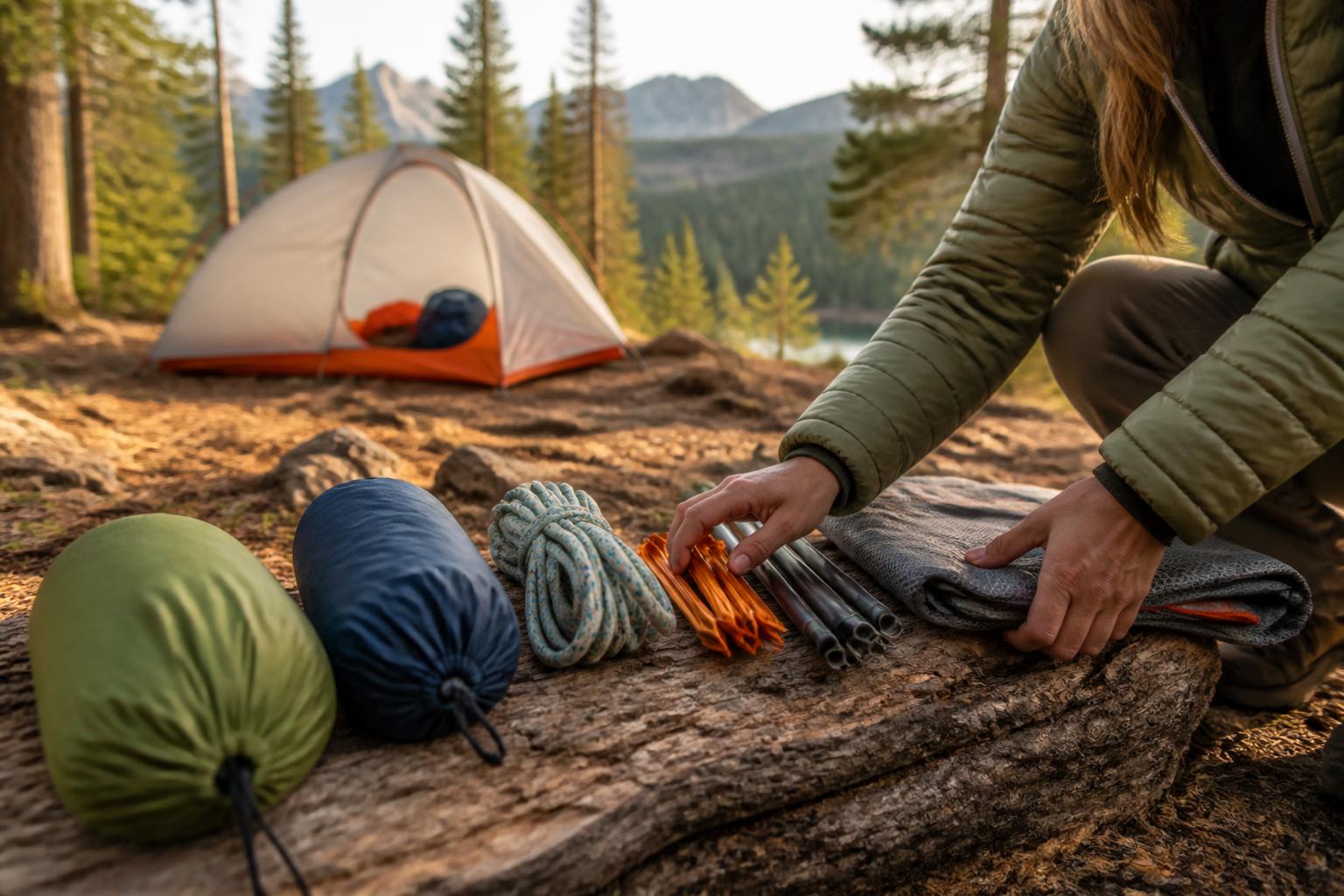
Tents: Keep the tent body, rainfly, and poles in a wide plastic bin. Fold the tent loosely (don’t stuff it the same way every time to avoid stress creases). Store tent stakes and the repair patch in a small bag inside the same bin so you can grab them fast. For compact backpacking tents like the Night Cat Backpacking Tent 2 Person Lightweight Camping Tent with Foldable Pole, Lightweight Fast Setup Double Layers Waterproof Ultralight Tent Compact 7×4.4ft – Two Doors, always unpack the tent at home and air it dry before folding it back into the stuff sack — don’t leave it compressed longer than a week.
Stoves and fuel: Place the stove inside a mesh bag or small tote to keep soot off other items. Use a permanent marker to label fuel canisters “empty” or “full.” Store all fuel away from heat sources and direct sunlight.
Cookware and utensils: Nest pots and pans with paper towels between them to prevent scratching. A plastic tote with a lid works well — just make sure everything is dry before sealing.

Sleeping pads: Roll them loosely (not too tight) and store lying flat or hanging. Avoid stacking heavy bins on top of them.
Multi-purpose duffels: A large duffel with separate compartments can help organize mixed gear. The Lekesky Foldable Travel Duffle Bag for Women, 80L Large Duffel Bag with Separate Shoes Compartments & Straps, Carry On Weekend Bag for Women, Hospital, Overnight (Blue Stripes) works well for sorting kitchen gear and shoes separately when you’re packing for a trip, but for long-term home storage an inexpensive plastic tote with a lid is usually more practical.
Label and Stack for Quick Access
Once every item is in its container, group similar bins together and label each one with a permanent marker or printed tag on at least two sides (top and front). Labels like “Tent & Poles,” “Sleeping Gear,” “Kitchen,” and “Misc. Tools” make grab-and-go packing much faster — you won’t have to open every bin to find the stove fuel.
- Stackable plastic bins work well for garages and basements. Keep heavier bins on the bottom and lighter items on top.
- Wall-mounted hooks or pegboards are perfect for hanging backpacks, camp chairs, and hammocks. A hammock can live on a hook year-round without taking shelf space.
- Shelving units turn a small closet into a gear depot. Use the top shelf for rarely used items (winter sleeping bag, 4-season tent) and eye-level shelves for stuff you grab every trip.
Gear Storage Readiness Checklist
Run through this list before you close the bin lids. Pass or fail each item.
- [ ] Sleeping bag is stored loose in a breathable sack, not compressed in its stuff sack.
- [ ] Tent and rainfly are completely dry — check seams and zipper tracks with your fingers.
- [ ] All fuel canisters and stoves are stored away from heat sources and electrical equipment.
- [ ] Batteries are removed from headlamps and lanterns, or contacts are protected with a tape tab.
- [ ] Each bin or bag has a written label on at least two sides (top and front).
- [ ] No food crumbs, wrappers, or crumbs remain in any pocket, cook bin, or backpack compartment.
Seasonal Maintenance — and When to Stop DIY
Twice a year — before camping season in spring and before winter storage in fall — open every bin and inspect for moisture, pests, or mildew. Fluff sleeping bags by tossing them in a low-heat dryer with a couple of clean tennis balls for 10 minutes. This restores loft and removes odors.
If you store gear in a garage or basement that gets humid, drop a few silica gel moisture absorbers inside each bin. Replace them every six months.
Escalation threshold — when to replace instead of repair: If you uncover widespread mildew (covering more than a few square inches on a tent or sleeping bag), or if the fabric feels papery, sticky, or has a strong musty odor that won’t air out after a full 24-hour drying session, the gear has degraded. DIY cleaning won’t restore structural integrity. Replace those items before your next trip — a tent with compromised waterproofing or a sleeping bag with damaged insulation will fail when you need it most.
Verification step — confirm your system is working: After your second seasonal check, close every bin and leave the area for one hour. Return and smell-test — no musty odors. Open one bin and feel the fabric of a sleeping bag or tent — it should feel dry and neutral. If everything passes, your storage system is sound.
FAQ
Should I store my sleeping bag inside its compression sack?
No. Compression sacks are for packing during travel only. For long-term storage, use a large cotton or mesh sack to keep the insulation fluffy.
How do I store camp fuel canisters safely?
Keep isobutane/propane canisters in a cool, dry place away from direct sun and heat sources. Store them upright, and never place them near pilot lights, electrical panels, or stored stoves.
Can I hang a tent by its pole corners?
Yes, but only if the tent is fully dry. Use a hanger with padded clips to avoid damaging the fabric. Better option for most people: store the tent loosely folded in a wide bin.
What’s the best container for cookware?
A plastic tote with a lid keeps soot and grease off other gear. Add a small piece of cardboard between nested pots to prevent scratches, and confirm everything is fully dry before closing the lid.

Camping Bob has spent over 20 years camping across the US — from BLM dispersed sites in the Southwest to KOA campgrounds in the Pacific Northwest. He writes practical, no-nonsense guides to help fellow campers get outdoors with confidence.