
Camp Kitchen and Cooking: From Meal Planning to Cleanup
To run a camp kitchen effectively, you need a meal plan that matches your gear, a setup that minimizes downtime, and a cleanup routine that prevents wildlife issues. Fail at any of these and you’ll spend more time fixing problems than cooking. The most common failure mode is planning meals that require tools, heat output, or prep space you don’t actually have on site—and that mistake is easy to catch before you leave home by auditing each recipe against your kit.
The practical implication: if you cannot verify every meal against your actual stove, fuel, and water capacity, you will either run out of fuel, waste clean water on multiple pots, or end up eating cold food. The fix is a pre-trip gear-menu match check, not a last-minute substitution at the trailhead.
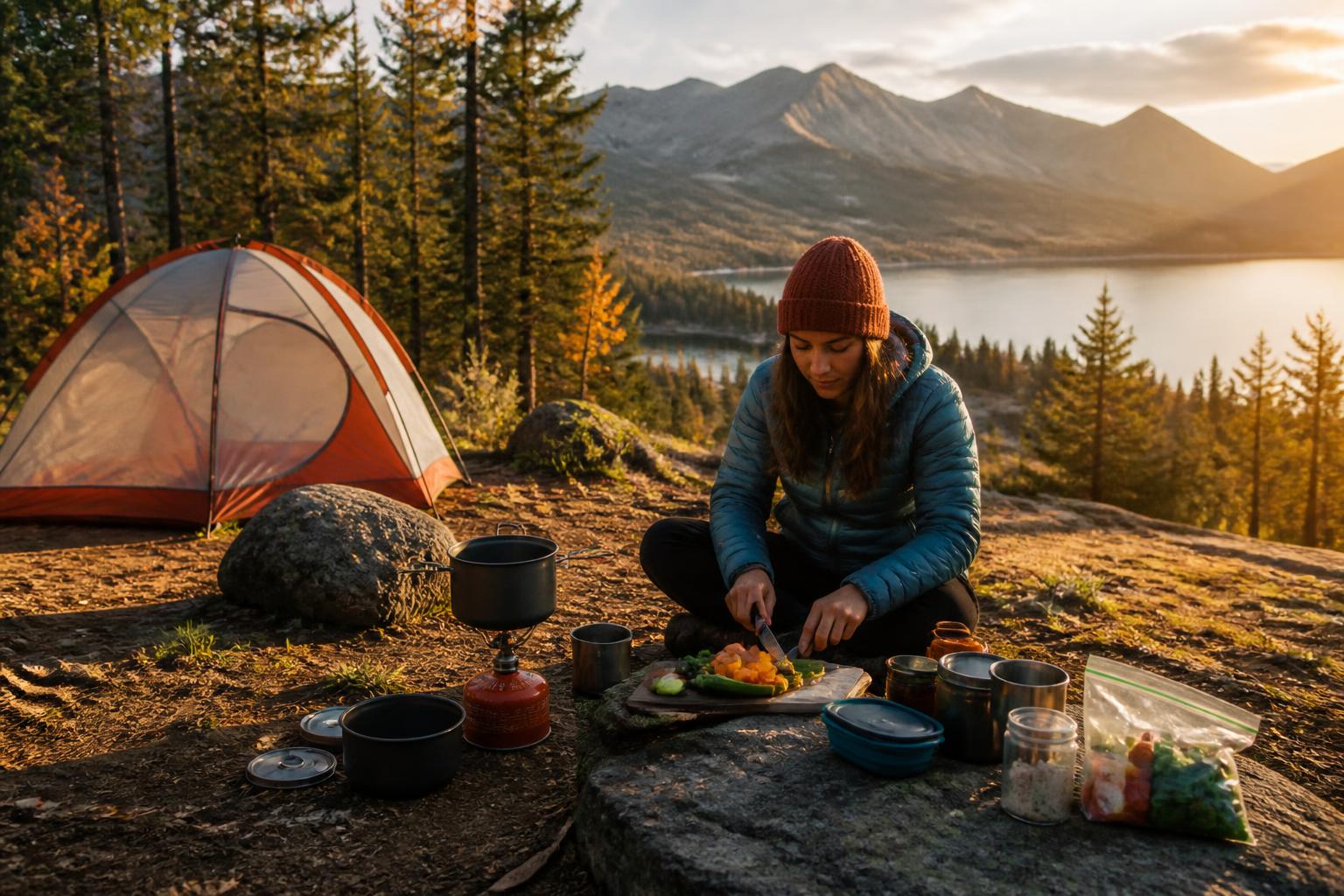
Plan Your Camp Menu Around Your Gear
The biggest reason camp cooking goes sideways is a menu written for a home kitchen. A three-burner induction range running on a single propane canister or a twig stove that needs constant feeding cannot replicate your stovetop. The early detection check is simple: for every meal, list the required cookware, maximum burner size, fuel consumption, and refrigeration needs. If one item in that chain is missing or underpowered, swap the meal.
Applicability Boundary: When This Rule Changes
The one-pot rule and gear-audit approach applies to trips where you carry all water and fuel (backpacking, canoe camping with limited weight) and to car-camping setups where space is available but water is scarce or you must pack out gray water. The rule flips if you are base camping with a full propane hookup and unlimited water—there you can run separate burners for boiling, sautéing, and simmering without penalty. Know which category your trip falls into before you plan.
Concrete Verification Step: Measure Your Stove’s Real Output
Before the trip, run a test boil at home: fill a quart pot with water at room temperature, time how long it takes to reach a rolling boil on your stove with a full canister. Write down the time in minutes. Multiply that by the number of quarts you need for each dinner recipe. If the total time exceeds 80% of your fuel canister’s burn time (printed on the canister), the recipe will fail on site. Repeat the test with your actual windscreen and at a similar elevation if possible. This gives you a pass/fail number, not a guess.
Realistic Mismatch or Trade-Off
Even with a perfect menu‑gear match, one trade-off appears on nearly every trip: you can bring more fuel (heavier) or accept longer cooking times with smaller meals. Many campers overestimate the capacity of a small canister. At 8,000 ft with a light wind, a 220-gram isobutane canister may deliver only 45 minutes of actual cook time, not the 60+ minutes advertised. The consequence is a cold dinner or a forced switch to no-cook meals a day early. The safer choice is to bring two small canisters instead of one large one—you can stage the second canister in your bear bag and swap mid-trip without carrying dead weight the whole time.
Expert Tip 1: Pre‑measure and repack ingredients.
Actionable step: Before the trip, portion dry goods into zip‑top bags labeled with meal name and water ratio. Remove all cardboard and glass packaging at home.
Common mistake: Bringing whole boxes or jars that take up extra space and create trash you have to carry out. Loose bags also pack flat into a bear canister or dry bag.
Expert Tip 2: Use a one‑pot meal rule for multi‑day trips.
Actionable step: Limit each dinner to a single pot or pan (e.g., chili, pasta with sauce, rice and beans). This cuts cleanup to one scrub and reduces fuel use by eliminating boil‑and‑drain steps.
Common mistake: Planning meals that require two separate pans per night. That doubles washing water, soap, and time, especially in bear‑country where all cookware must be cleaned and stored away from camp.
Expert Tip 3: Account for elevation and wind.
Actionable step: At elevations above 5,000 ft, boil times increase by 20–30%. If your stove does not have a simmer ring, plan meals that cook at a rolling boil only. Use a windscreen that still allows stove ventilation.

Common mistake: Assuming the stove will perform the same as at sea level. A four‑minute boil at home can take seven minutes at 8,000 ft, burning through fuel faster than expected.
Set Up Your Camp Kitchen for Efficiency
Layout determines how much time you spend hunting for a spoon vs. actually eating. Establish a “cook triangle” between stove, prep surface, and food storage bag. Each point should be within arm’s reach and clear of trip hazards. Orient the stove so the burner direction matches the prevailing wind—side winds waste fuel and unevenly cook food.
Site Selection Rules
- Flat, level ground at least 10 ft from any tent (spark and food‑odor separation).
- Padded ground (packed dirt or gravel) to keep the stove stable.
- Natural shade for perishables if you do not have a cooler.
Gear Staging (Minimize Digging)

- Hang a mesh bag with salt, pepper, oil, and small tools from a nearby branch or ridgeline.
- Keep a dedicated “wash bin” (a collapsible silicone bucket with lid) paired with a second “rinse” bin. Fill both only when ready to clean.
- Store all food and scented items in bear canisters or an approved hang at least 100 ft downwind from the kitchen.
Cleanup That Prevents Problems
The fastest way to draw bears, raccoons, or ants to your site is leaving food residue on cookware, clothes, or the ground. A thorough cleanup also extends the life of non‑stick coatings and fuel canister threads.
Quick Pre‑Trip Decision Aid
Before you load the car, confirm each item with a pass/fail:
- [ ] Menu‑gear match: Every meal’s cookware, burner count, and fuel volume are verified against your actual stove setup using the test boil numbers.
- [ ] Fuel margin: You have at least 20% more fuel than the recipes call for (account for wind, elevation, cold starts). If you can’t measure it, bring one extra small canister.
- [ ] Water plan: You know where and how you’ll get enough water for cooking plus cleanup (minimum 1 gallon per person per day for drinking + cooking, plus 0.5 gallon for washing).
- [ ] Cleanup kit complete: You carry biodegradable soap, a scrub sponge (not kitchen sponge; use a fine‑grit scraper), a drying towel, and sealable trash bags for gray water if required.
- [ ] Food storage plan: Bear canister or hang system is packed, and you have a written plan for where it will be placed each night (100+ ft from kitchen, 100+ ft from sleeping area).
Ordered Cleanup Process
- Scrape all food solids into a trash bag before adding any water. Even small bits of cheese or oil spread quickly.
- Heat a small amount of water (about 1 cup per pot) to near boiling, then scrub with a sponge and a few drops of biodegradable soap. Hot water cuts grease far better than cold.
- Rinse with clean, cold water—no soap residue allowed. Dump gray water at least 200 ft from any water source and only if regulations permit. Otherwise pack it out.
- Air‑dry everything upside down on a clean rock or stump. Do not put damp pots back into a stuff sack—mold and rust will form within one damp night.
- Store cleaned gear in a separate smell‑containing bag (e.g., a dry sack or rolling‑top stuff sack) away from your tent. Pots and utensils still carry trace odors a bear can detect.
Areas People Often Miss
- The lid gasket of a camping pot. Food particles lodge in the rubber seal; rinse it with hot water and a toothpick if needed.
- The drip tray under your camp stove. A few drops of oil can start to smell rancid by morning. Wipe it with a paper towel after each use.
- The outside of your fuel canister. Propane/butane tanks attract ants if a sticky glaze from spilled drinks stays on the metal.
Success check: Rub your finger firmly across the inside of a cleaned pot. If you feel any slickness or smell any food odor, wash again. Clean gear should have no scent and should leave no residue on a dry paper towel.
When to Switch to a Backup Plan
If you detect one of these early warning signs mid‑trip, it is time to simplify without turning the trip into a survival exercise:
- Supper takes longer than 45 minutes from unpack to eating. Shift to instant or no‑cook meals for the next night so you can rest and reorganize.
- Fuel runs out before the last meal. You can cold‑soak oats or couscous in a sealed container without heat. No‑cook tortilla wraps with peanut butter and dried fruit are faster.
- Cleanup water runs short. Switch to eating from freezer bags (just add boiling water) so you only need to wash one utensil per person. Or use a single spork that you can wipe clean with a bandana.
Camp cooking does not have to be a test of patience. The difference between a smooth trip and a frustrating one is caught in the planning phase—audit your menu, your gear, and your cleanup sequence before you leave the driveway. Once you are on site, stick to the one‑pot rule, keep your wash bin separate, and pack out all waste. Your next meal will be ready faster, and the local wildlife will stay where they belong.

Camping Bob has spent over 20 years camping across the US — from BLM dispersed sites in the Southwest to KOA campgrounds in the Pacific Northwest. He writes practical, no-nonsense guides to help fellow campers get outdoors with confidence.