
Applying an Elastic Cover to Your Air Mattress
Quick answer
- Measure your air mattress.
- Choose a cover that fits the dimensions.
- Unfold the cover.
- Start at one corner.
- Stretch the elastic edge over the mattress.
- Smooth out any wrinkles.
- Tuck in excess fabric.
What to check first (do this before you drive out)
Before you wrestle with that air mattress and cover, let’s get the basics straight. This isn’t about finding a campsite, but it’s just as crucial for a good night’s sleep.
- Mattress Dimensions: You gotta know what you’re working with. Is it a twin, queen, or some weird custom size? Measure the length, width, and height. Seriously, don’t eyeball it. I once thought my twin was a twin. Turns out, it was a bit wider. That cover was toast.
- Cover Size & Type: Does your cover match your mattress? Check the packaging for its intended dimensions. Is it a deep pocket cover? That’s usually what you want for an air mattress, which can be pretty lofty.
When checking your cover size, consider an air mattress fitted sheet for a snug and comfortable fit.

- Condition of Both Items: Inspect the air mattress for any leaks or tears. A flat mattress makes putting on a cover a real pain. Check the cover for loose threads or damaged elastic. A busted elastic band means it’s not going to stay put.
- Cleanliness: Nobody wants to sleep on a dusty or dirty mattress, even with a cover. Give both a quick wipe-down if needed. Especially if it’s been stashed away for a while.
Step-by-step (field workflow)
Alright, let’s get this done. It’s not rocket science, but a little method goes a long way.
1. Inflate the Mattress (Partially):
- What to do: Blow up your air mattress until it’s firm but not rock-hard. A little give is actually helpful.
- What “good” looks like: The mattress holds its shape, but you can still slightly press into it.
- Common mistake: Over-inflating. This makes the mattress rigid and hard to stretch the cover over. Avoid this by stopping when it’s firm, not taut.
2. Locate a Corner:
- What to do: Find one of the corners of your air mattress.
- What “good” looks like: You’ve identified a clear starting point.
- Common mistake: Trying to start in the middle of a side. Corners are usually the easiest place to get the elastic started.
3. Drape the Cover:
- What to do: Lay the elastic cover over the mattress, aligning one of its corners with the mattress corner you identified.
- What “good” looks like: The cover is roughly positioned, with the elastic edge hanging down.
- Common mistake: Not unfolding the cover completely. Make sure it’s spread out so you can see the whole thing.
4. Hook the First Corner:
- What to do: Gently pull the elastic edge of the cover down and under the mattress corner.
- What “good” looks like: The elastic is securely tucked under the mattress corner.
- Common mistake: Yanking too hard. You can tear the elastic or the cover if you’re not careful. Be firm but gentle.
5. Move to the Opposite Corner:
- What to do: Go to the corner diagonally opposite the one you just secured.
- What “good” looks like: You’re positioned for the next stretch.
- Common mistake: Going to an adjacent corner. This often makes it harder to get the tension right. Diagonals work best.
6. Stretch and Hook:
- What to do: Pull the cover’s elastic edge down and under the mattress corner, stretching it as needed.
- What “good” looks like: Both opposing corners are now secured. The cover should start to feel snug.
- Common mistake: Not stretching enough. You need tension to get the elastic to grip.
7. Secure the Remaining Corners:
- What to do: Move to the third and fourth corners, stretching the cover and tucking the elastic edge underneath.
- What “good” looks like: All four corners are firmly in place.
- Common mistake: Forgetting to check the sides. Sometimes the elastic can slip off the sides if not pulled down enough.
8. Smooth Out Wrinkles:
- What to do: Run your hands over the surface of the mattress and the cover.
- What “good” looks like: The cover is smooth, with minimal bunching or wrinkles.
- Common mistake: Leaving major wrinkles. They can be uncomfortable to sleep on and make the cover look sloppy.
9. Tuck Excess Fabric:
- What to do: If there’s any excess fabric, especially around the sides or ends, tuck it neatly under the mattress.
- What “good” looks like: A clean, tight fit all around.
- Common mistake: Letting the fabric hang loose. It can get caught on things or just look messy.
10. Final Check:
- What to do: Give the whole thing a good once-over.
- What “good” looks like: The cover is snug, smooth, and won’t shift easily.
- Common mistake: Skipping this. A quick final check can catch any spots that need adjusting before you settle in.
Common mistakes (and what happens if you ignore them)
| Mistake | What it causes | Fix |
|---|---|---|
| Not measuring mattress/cover | Cover won’t fit, too loose, or too tight. Frustration. | Measure first. Always. |
| Over-inflating the air mattress | Makes stretching the cover impossible. Can stress the mattress seams. | Inflate to firm, not taut. Leave a little give. |
| Starting in the middle of a side | Uneven tension, hard to get corners to stay. | Always start with a corner. |
| Not stretching the elastic enough | Cover slips off easily. Doesn’t stay tucked. | Pull firmly when stretching the elastic under the mattress. |
| Using adjacent corners first | Creates diagonal tension issues. Makes it harder to get a good fit. | Work diagonally across the mattress for best results. |
| Not smoothing out wrinkles | Uncomfortable to sleep on. Looks sloppy. | Run your hands over the surface and tuck/pull to remove creases. |
| Forgetting to tuck excess fabric | Fabric can snag, get caught, or just look messy. | Tuck any loose edges neatly underneath the mattress. |
| Ignoring a tear in the mattress/cover | Mattress deflates. Cover rips further. | Inspect both items before you start. Repair or replace if damaged. |
| Trying to do it alone (for larger sizes) | Awkward angles, straining the cover, potential for one side to pop off. | Get a buddy to help with larger mattresses. Teamwork makes the dream work. |
| Using the wrong type of cover | Deep pockets are best for air mattresses; shallow ones won’t stay on. | Ensure you have a deep-pocket fitted sheet or a cover designed for thicker mattresses. |
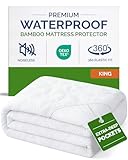
If you’re using the wrong type of cover, an elastic mattress cover with deep pockets is often the best choice for air mattresses to ensure it stays put.
Decision rules (simple if/then)
- If your air mattress is significantly taller than a standard mattress, then use a deep-pocket fitted sheet or a cover specifically designed for thicker mattresses because standard ones won’t stay on.
- If the cover elastic feels flimsy, then be extra gentle when stretching because it might tear easily.
- If the air mattress is fully inflated, then let some air out because it will be much easier to stretch the cover.
- If you’re struggling to get one corner on, then check if the opposite corner is already securely in place because that can affect the tension.
- If the cover keeps popping off the corners, then you’re likely not stretching the elastic enough or the mattress is too firm.
- If there are large wrinkles, then try pulling the cover taut from the opposite side to smooth them out because tension helps.
- If the cover seems too small, then double-check the dimensions and make sure you’re not trying to fit a queen cover on a king mattress.
- If you notice a small tear in the cover, then consider a temporary patch or using it only on a mattress that doesn’t get too much pressure because it might get worse.
- If the air mattress has a very slick surface, then ensure the elastic has a good grip by tucking it well underneath because it can slide off more easily.
- If you’re using a standard bed sheet instead of a dedicated cover, then be prepared to tuck it in frequently because sheets are less likely to stay put on their own.
If your air mattress is significantly taller than a standard mattress, an air mattress fitted sheet designed for thicker mattresses will provide the best fit.
FAQ
Q: Do I need a special cover for an air mattress?
A: Not necessarily. A deep-pocket fitted sheet designed for thick mattresses usually works great. Just make sure it fits the dimensions.
While not always required, an elastic mattress cover with deep pockets can make a significant difference in comfort and how well the cover stays on your air mattress.
Q: What if my air mattress is an odd shape?
A: You might have to get creative. Standard covers might not work well. Look for stretch-fit covers or consider a large flat sheet you can tuck securely.
Q: How tight should the cover be?
A: It should be snug enough to stay in place without shifting, but not so tight that it stresses the seams of the mattress or the cover.
Q: Can I put a cover on an air mattress that’s already set up in a tent?
A: Yes, it’s usually easier to put the cover on before the mattress is fully inflated or before you set up your sleeping bag and gear.
Q: What if the cover bunches up in the middle?
A: Gently pull the edges from the sides or corners to smooth it out. Sometimes a little adjustment is all it takes.
Q: Will a cover make my air mattress more comfortable?
A: It can! It adds a layer of softness and can prevent that plasticky feel against your skin. Plus, it keeps the mattress cleaner.
Q: My cover keeps slipping off the ends. What am I doing wrong?
A: You might need to let a little air out of the mattress, or ensure you’re stretching the elastic edge all the way under the mattress.
Q: Is it okay to use a very thin cover?
A: For protection and a bit of comfort, yes. But if you’re looking for insulation or significant padding, you’ll need something thicker.
What this page does NOT cover (and where to go next)
- Air mattress inflation methods: This guide assumes you know how to inflate your mattress. Next, explore different pump types (electric, manual) and techniques for optimal inflation.
- Choosing the right air mattress: We’re focused on the cover. If you’re shopping for a new mattress, research durability, comfort levels, and intended use (car camping vs. backpacking).
- Sleeping bag selection: A comfortable bed is key, but so is your sleeping bag. Learn about temperature ratings, fill types (down vs. synthetic), and bag shapes.
- Tent setup and maintenance: Your mattress sits inside a tent. Next, learn best practices for pitching your tent, seam sealing, and choosing the right size.
- Camping hygiene and waste disposal: Keeping your campsite clean is vital. Look into Leave No Trace principles for waste, water, and general campsite etiquette.

Camping Bob has spent over 20 years camping across the US — from BLM dispersed sites in the Southwest to KOA campgrounds in the Pacific Northwest. He writes practical, no-nonsense guides to help fellow campers get outdoors with confidence.