
Using Tent Guy Lines for Stability and Support
Quick answer
- Always use your tent’s guy lines. They’re not just for show.
- Secure them to stakes driven firmly into the ground.
- Adjust tension for a taut, stable pitch.
- Angle them away from the tent body.
- Use trees or sturdy objects if stakes aren’t an option.
- Practice pitching at home before your trip.
What to check first (do this before you drive out)
Before you even think about hitting the road, a little prep goes a long way.
- Land manager / legality: Who owns the dirt you’re camping on? Is it National Forest, BLM land, a state park, or private property? Each has its own rules. A quick look at the managing agency’s website (USFS, BLM, NPS, state park system) will clear things up. Don’t get surprised by a ranger asking you to pack up.
- Access/road conditions: Can your rig actually get there? Is it a paved road, a well-maintained gravel track, or a rocky, rutted mess? Know your vehicle’s capabilities – 2WD, AWD, high clearance. A quick Google Maps satellite view or a call to the ranger station can save you a tow. Mud, snow, or washouts can shut down access fast.
- Fire restrictions + weather + wind: This is huge. Check current fire restrictions. Seriously. A campfire ban means no fire. Also, look at the forecast. Rain is one thing, but high winds are where guy lines really earn their keep. A calm day can turn into a blow-out in minutes out there.
- Water plan + waste plan (Leave No Trace): Where will you get water? Is there a potable source, or do you need to filter/purify? And what about waste? Pack it in, pack it out. This includes trash, food scraps, and human waste if no facilities are available. LNT principles are non-negotiable.
- Safety (wildlife, distance to help, comms): What kind of critters share the neighborhood? Know what to do about bears, snakes, or whatever else is around. How far is the nearest town or ranger station? Do you have cell service? A satellite communicator or a good old-fashioned plan with someone back home is smart.
Step-by-step (field workflow)
Pitching a tent is a process. Doing it right means a dry, stable night.
1. Find your spot.
- What to do: Scout a level, well-drained area. Avoid low spots that collect water or areas directly under dead trees (widowmakers).
- What “good” looks like: A flat, clear patch of ground, ideally protected from the worst of the wind but not so enclosed that ventilation is bad.
- Common mistake: Pitching on a slope. This means you’ll slide around all night. Pick a better spot.
2. Lay out the tent body.
- What to do: Unfold the tent and spread it out roughly where you want it. Orient the doors for convenience and wind direction.
- What “good” looks like: The tent is roughly positioned, and you can see the layout.
- Common mistake: Not orienting the tent. You might end up with your door directly into the wind.
3. Insert poles and raise the tent.
- What to do: Assemble tent poles and insert them into the designated sleeves or clips. Lift the tent body into its structure.
- What “good” looks like: The tent is standing, loosely supported by the poles.
- Common mistake: Forcing poles. If they don’t slide easily, check for snags or misalignment.
4. Stake down the corners.
- What to do: Use the stakes provided to secure the tent’s base corners. Drive stakes at a 45-degree angle away from the tent.
- What “good” looks like: The tent is anchored securely at its base.
- Common mistake: Not driving stakes deep enough. They can pull out in wind. Drive them all the way in, or use rocks if the ground is too hard.
5. Attach and deploy guy lines.
- What to do: Find the loops or grommets for the guy lines. Attach the lines and let them hang loose for now.
- What “good” looks like: All guy lines are connected to their attachment points.
- Common mistake: Forgetting to attach them. They’re usually separate in the bag.
6. Position and stake guy lines.
- What to do: Extend each guy line away from the tent at roughly a 45-degree angle from the stake point. Stake them securely.
- What “good” looks like: Guy lines are running out from the tent at a good angle, creating tension points.
- Common mistake: Staking guy lines too close to the tent. This doesn’t provide enough leverage for stability.
7. Tension the guy lines.
- What to do: Use the tension adjusters on the guy lines to pull them taut. Adjust until the tent fabric is smooth and firm, but not overstretched.
- What “good” looks like: The tent walls are taut, with no slack. The structure feels solid.
- Common mistake: Leaving them too loose. This defeats the purpose of stability. Or, over-tensioning, which can damage seams or poles.
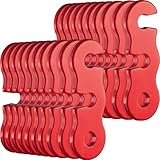
For optimal stability, ensure your tent’s guy lines are properly tensioned. Consider upgrading to durable guy line tensioners for easier and more secure adjustments.
8. Adjust for wind and rain.
- What to do: If wind picks up, re-tension the lines. If rain is expected, ensure lines are taut to help water run off smoothly.
- What “good” looks like: The tent remains stable and shed water effectively, regardless of conditions.
- Common mistake: Not checking and adjusting as conditions change. A tent that’s fine in calm weather can be a sail in a gust.
9. Secure excess line.
- What to do: Wrap any extra guy line around the stake or use a keeper to prevent tripping hazards.
- What “good” looks like: No loose loops of cord lying around your campsite.
- Common mistake: Leaving long, dangly bits of rope. Someone (or you) will trip.
Common mistakes (and what happens if you ignore them)
| Mistake | What it causes | Fix |
|---|---|---|
| Not using guy lines at all | Tent flaps violently in wind, can collapse, rain pools on fabric. | Use them. Every time. Especially if wind or rain is even a remote possibility. |
| Staking guy lines too close to the tent | Little leverage against wind, tent still flexes and can flap excessively. | Angle them out at least 45 degrees from where they attach to the tent. |
| Leaving guy lines too loose | Tent fabric sags, doesn’t shed rain well, still susceptible to wind damage. | Tension them until the fabric is taut. You should see the fabric pull tight across the poles. |
| Over-tensioning guy lines | Strains seams, can bend or break poles, can rip fabric. | Tension until taut, but don’t yank them to the breaking point. Fabric should be smooth, not stretched drum-tight. |
| Not staking guy lines securely | Stakes pull out, lines go slack, tent becomes unstable and can collapse. | Drive stakes fully into the ground at a 45-degree angle away from the tent. Use rocks to help if ground is soft or shallow. |
| Using the wrong stakes for the ground | Stakes won’t hold in sand, are impossible to drive in rocky soil, or bend easily. | Carry different stake types (e.g., sand stakes, rock pegs) or know how to improvise with rocks and logs. |
| Not orienting the tent correctly | Main door faces the wind, causing drafts and making entry/exit difficult. | Consider prevailing wind direction when pitching. Often, orienting the narrower end into the wind is best. |
| Tripping over loose guy lines | Falls, potential injury, damage to tent or gear. | Secure excess line neatly around the stake or use a keeper. Keep your campsite tidy. |
| Not checking guy line tension regularly | Tent becomes slack as it settles or wind shifts, leading to poor performance. | Periodically check and adjust guy lines, especially if wind conditions change or after rain. |
| Pitching on a slope | You slide down your sleeping bag all night, and water can pool inside the tent. | Find a level spot. If absolutely necessary, pitch with your head uphill and use any slight depressions to your advantage. |
If you find your guy lines frequently loosening, investing in reliable guy line tensioners can significantly improve your tent’s stability in varying conditions.
Decision rules (simple if/then)
- If the forecast calls for any wind, then deploy all guy lines because they provide crucial stability.
- If you’re camping in sand, then use wide sand stakes for your guy lines because standard stakes will pull out easily.
- If the ground is rocky and you can’t drive stakes, then use heavy rocks to anchor your guy lines because they offer a solid anchor point.
- If you’re in a high-wind area, then angle your guy lines out further from the tent because this increases their leverage.
- If you notice slack in your guy lines after a few hours, then re-tension them because wind and fabric settling can loosen them.
- If you’re using a tarp as a shelter, then guy lines are essential for its structure, so pay extra attention to their tension and anchor points.
- If you’re pitching in a thunderstorm, then ensure all stakes are deeply embedded and guy lines are taut because lightning strikes can be dangerous if your shelter collapses.
- If you’re in a crowded campground, then keep your guy lines visible and avoid tripping hazards because you don’t want to be responsible for someone else’s fall.
- If your tent has reflective guy lines, then make sure they are illuminated at night because they can be hard to see and become tripping hazards.
- If you are in a desert environment, then consider using larger rocks or deadfall to anchor your lines if stakes are not feasible.
- If your tent fabric feels overly stretched, then ease up on the guy line tension slightly because you don’t want to damage the material.
FAQ
What exactly are tent guy lines for?
Guy lines are cords attached to your tent that you stake to the ground. Their main job is to add stability, especially in windy conditions, and to keep the tent fabric taut for better rain runoff.
Do I really need to use them if it’s not windy?
Even on calm nights, guy lines help keep your tent’s shape and can prevent it from shifting if you roll over in your sleep. They’re also useful for creating a bit more internal space by pulling the walls away from the poles.
How far away from the tent should I stake my guy lines?
A good rule of thumb is to stake them out at about a 45-degree angle from where they attach to the tent. This gives them the best leverage against wind.
What happens if I don’t stake them firmly enough?
If your stakes pull out or aren’t driven deep enough, the guy lines will go slack. This means your tent won’t be stable, and wind can cause it to flap or even collapse.
Can I use trees or other objects instead of stakes?
Yes, if stakes aren’t an option (like on solid rock or in a forest), you can tie guy lines around sturdy trees, large rocks, or even use a small shovel as an anchor buried in the ground. Just make sure whatever you tie to is solid.
My tent came with really thin cord. Is that okay?
Most tent guy lines are made of strong, lightweight cord. As long as it’s not frayed or damaged, it should be sufficient for its intended purpose. If it feels flimsy, you can always upgrade to a slightly thicker, reflective cord for better visibility.
What if my tent has multiple guy lines? Do I use them all?
Yes, use all the guy lines your tent provides. They are strategically placed to support different parts of the tent structure and provide maximum stability and tension.
What this page does NOT cover (and where to go next)
- Specific tent repair techniques for damaged poles or fabric.
- Advanced knot-tying for camping beyond basic hitches.
- Detailed weather forecasting for specific regions.
- Comprehensive Leave No Trace (LNT) principles beyond waste and water.
- Choosing the right tent for different types of camping (backpacking vs. car camping).

Camping Bob has spent over 20 years camping across the US — from BLM dispersed sites in the Southwest to KOA campgrounds in the Pacific Northwest. He writes practical, no-nonsense guides to help fellow campers get outdoors with confidence.