
Safely Emptying Propane Tanks for Disposal
Quick answer
- Never vent propane to the atmosphere. It’s a fire hazard and bad for the environment.
- Use a dedicated propane exchange service if available. It’s the easiest way.
- Empty tanks slowly and safely if you must do it yourself.
- Use a proper adapter to connect to a suitable exhaust point.
- Vent to a safe, open area far from ignition sources.
- Confirm the tank is empty before disposal.
What to check first (do this before you drive out)
Before you even think about emptying a propane tank, let’s get a few things straight. This isn’t rocket science, but it demands respect.
- Land manager / legality: Who owns the land where you plan to do this? Is it public land (like USFS or BLM), private, or your own backyard? Disposal rules can vary wildly. For instance, most municipal waste facilities won’t take full propane tanks, and some might not even take empty ones without proof they’ve been properly vented. Always check with the local authority or disposal site before you haul anything over there.
- Access/road conditions: This is more about getting to a safe spot than anything. You need a wide-open, well-ventilated area. Think a big, empty field, not your garage or a crowded campground. Make sure you can get your vehicle and the tank to this spot without issue. If you’re heading to a remote spot, check those road conditions. Muddy tracks or rough terrain can make a simple task complicated.
- Fire restrictions + weather + wind: This is critical. Propane is flammable. Are there any fire bans in effect? Even if not, you need to be hyper-aware of ignition sources. No smoking, no open flames, no running engines nearby if you can help it. Check the weather forecast. You want calm conditions. High winds can be unpredictable and might blow residual fumes toward an ignition source. A light breeze is good for dispersing fumes, but a gale? Nah.
- Water plan + waste plan (Leave No Trace): While emptying a propane tank isn’t like packing out your trash, it’s still about responsible stewardship. Have a plan for what you’ll do with the tank after it’s empty. Where will you take it? Do you need to transport it? Ensure you have a way to safely move it. Also, have water handy. Not for drinking, but in case of any minor spills or to cool down a valve if it gets warm (though this shouldn’t happen with a slow, controlled vent).
- Safety (wildlife, distance to help, comms): Work in an area where you can see your surroundings. Be aware of any wildlife. While unlikely to be drawn to propane fumes, it’s always good practice to be aware. How far are you from the nearest help if something goes sideways? Do you have cell service? It’s a good idea to have someone know where you are and what you’re doing, especially if you’re out in the boonies.
Step-by-step (field workflow)
Alright, let’s break down how to do this safely. Think of it like setting up camp – slow and steady wins the race.
1. Gather your gear.
- What to do: You’ll need the propane tank, a proper propane tank emptying adapter (these are specific and have a shut-off valve), and potentially a small hose if your adapter doesn’t have one integrated.
- What “good” looks like: All your pieces are accounted for, clean, and in good working order. No frayed hoses or cracked adapters.
- A common mistake and how to avoid it: Using the wrong adapter. Some people try to jury-rig things. Don’t. Buy the right tool for the job. It’s cheap insurance.
For safe and controlled emptying, you’ll need a reliable propane tank adapter. This tool is essential for connecting your tank to a suitable exhaust point.
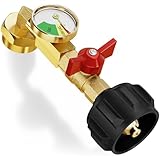
2. Choose your venting location.
- What to do: Find a large, open, outdoor space away from buildings, vehicles, dry grass, and any potential ignition sources (flames, sparks, static electricity). A wide-open field or a paved, unused area is ideal.
- What “good” looks like: You can stand there and see for hundreds of yards in every direction without obstructions.
- A common mistake and how to avoid it: Trying to vent in a confined space like a garage or shed. This is incredibly dangerous and can lead to an explosion. Always, always, always go outside.
3. Position the tank.
- What to do: Place the tank upright on a stable surface.
- What “good” looks like: The tank isn’t going to tip over.
- A common mistake and how to avoid it: Laying the tank on its side. While some operations might do this, for controlled venting, upright is generally safer and easier to manage.
4. Connect the adapter.
- What to do: Screw the propane tank emptying adapter securely onto the tank’s valve. Make sure it’s tight but don’t overtighten.
- What “good” looks like: The adapter is snug and straight, no wobbling.
- A common mistake and how to avoid it: Cross-threading the adapter. This can damage the valve and make it impossible to get a good seal. Take your time and feel the threads engage smoothly.
5. Attach the hose (if applicable).
- What to do: If your adapter has a separate hose, connect it now. Ensure the connection is secure.
- What “good” looks like: A tight, leak-free connection.
- A common mistake and how to avoid it: Not ensuring the hose is properly seated. A loose hose can pop off under pressure.
6. Open the tank valve SLOWLY.
- What to do: Turn the tank valve counter-clockwise to open it. Do this very gradually. You should hear a faint hiss.
- What “good” looks like: A gentle, controlled hiss. You’re not trying to empty it in seconds.
- A common mistake and how to avoid it: Ripping the valve open. This releases propane too quickly, creating a potential vapor cloud and increasing the risk of static discharge. Patience is key here.
7. Control the flow with the adapter valve.
- What to do: Use the valve on your emptying adapter to control the rate of propane release. You want a slow, steady stream, not a blast. Direct the hose away from yourself and any potential hazards.
- What “good” looks like: You can feel a steady, controlled flow coming out, and the hiss is consistent. The smell of propane should be minimal and dissipate quickly.
- A common mistake and how to avoid it: Leaving the adapter valve fully open. This is the same mistake as point 6, just on a different valve. Control is paramount.
8. Monitor the process.
- What to do: Stay with the tank and adapter the entire time. Listen for changes in the hiss. It will gradually get quieter as the tank empties.
- What “good” looks like: The hiss is getting progressively softer. No sudden surges or stops.
- A common mistake and how to avoid it: Walking away and leaving it unattended. You need to be there to ensure it’s venting properly and to shut it off when it’s done.
9. Close the tank valve.
- What to do: Once the hiss has stopped or is barely audible, close the tank valve completely by turning it clockwise.
- What “good” looks like: The valve is fully shut.
- A common mistake and how to avoid it: Not closing the tank valve fully. You want to ensure no residual pressure can escape.
10. Vent residual gas.
- What to do: With the tank valve closed, slightly open the adapter valve to release any remaining gas trapped in the adapter and hose. Then close the adapter valve.
- What “good” looks like: A brief, final puff of gas, then silence.
- A common mistake and how to avoid it: Forgetting this step. There’s always a little bit left in the lines.
11. Confirm the tank is empty.
- What to do: You can gently try to open the tank valve again. If you hear no hiss, it’s empty. Some people even weigh them; an empty tank is significantly lighter.
- What “good” looks like: Absolutely no sound when you briefly crack the valve open.
- A common mistake and how to avoid it: Assuming it’s empty just because the main hiss stopped. A quick double-check is always wise.
12. Dispose of the tank.
- What to do: Take the confirmed empty tank to your designated disposal location (scrap metal yard, recycling center, or specific hazardous waste facility).
- What “good” looks like: The tank is accepted for disposal.
- A common mistake and how to avoid it: Trying to dispose of a tank that isn’t truly empty. This can cause major problems at the disposal site and is a safety hazard.
Common mistakes (and what happens if you ignore them)
| Mistake | What it causes | Fix |
|---|---|---|
| Venting propane in an enclosed space | Fire, explosion, suffocation, toxic fumes filling the area. | <strong>Always vent outdoors in a wide-open, well-ventilated area.</strong> |
| Ripping the tank valve open | Rapid, uncontrolled release of flammable gas, creating a large vapor cloud, increasing ignition risk. | <strong>Open the tank valve very slowly and gradually.</strong> |
| Using the wrong or a damaged adapter | Leaks, poor seal, uncontrolled release of propane, potential for injury. | <strong>Use a purpose-built, leak-free propane tank emptying adapter.</strong> Inspect it before each use. |
| Not monitoring the venting process | Unnoticed leaks, uncontrolled release, potential for gas to travel to an ignition source. | <strong>Stay with the tank and adapter the entire time.</strong> Listen and observe. |
| Forgetting to close the tank valve | Residual propane can escape, making the tank not truly empty, posing a risk during transport or disposal. | <strong>Ensure the tank valve is fully closed after venting.</strong> |
| Assuming the tank is empty too soon | Disposing of a partially full tank, causing issues at the disposal site, potential for leaks. | <strong>Perform a final check by briefly cracking the tank valve open to confirm no residual gas.</strong> |
| Disposing of a tank that isn’t empty | Hazardous waste violation, potential for explosion at landfill or recycling center, fines. | <strong>Confirm the tank is 100% empty before taking it for disposal.</strong> |
| Not checking local fire restrictions | Accidental ignition of dry vegetation or structures, leading to wildfires or property damage. | <strong>Always check local fire danger levels and restrictions before any outdoor venting.</strong> |
| Trying to speed up the process | Overwhelms the venting system, creates unnecessary risk, defeats the purpose of controlled emptying. | <strong>Be patient. Slow and steady is the only way to safely empty a propane tank.</strong> |
| Not having water nearby | Inability to cool a valve if it unexpectedly heats up (rare, but possible with extreme pressure changes). | <strong>Keep a bucket of water handy, just in case.</strong> |
To ensure a leak-free connection and prevent damage, always use a purpose-built propane valve removal tool. It’s a small investment for significant safety.

Decision rules (simple if/then)
- If you can use a propane exchange service, then use it because it’s the safest and easiest option.
- If you hear a loud, uncontrolled whoosh of propane, then immediately close the adapter valve and the tank valve because you’re releasing too much too fast.
- If you smell a strong, persistent odor of propane after venting, then wait longer or re-check your connections because there might be a leak.
- If there’s any doubt about whether the tank is truly empty, then err on the side of caution and vent it a bit longer or get professional advice because an unconfirmed empty tank is a hazard.
- If you see any signs of damage to the tank valve or the adapter, then do not proceed with venting because it’s unsafe.
- If the wind picks up significantly during venting, then stop the process and wait for calmer conditions because wind can carry fumes to ignition sources.
- If you are unsure about any step in the process, then stop and seek expert advice or use a professional service because safety is paramount.
- If you are venting near a campsite or populated area, then move to a more isolated location because you don’t want to risk anyone else’s safety.
- If the adapter valve gets warm during venting, then stop and let it cool down, then resume slowly because it indicates unusual pressure buildup.
- If you plan to transport the emptied tank, then ensure the valves are securely closed and the tank is upright because you don’t want any residual gas escaping.
FAQ
Q: Can I just let the propane out in my backyard?
A: No, never. Your backyard likely has ignition sources like pilot lights, static electricity, or even hot surfaces. Always go to a wide-open, isolated outdoor space.
Q: How long does it take to empty a propane tank?
A: It depends on the tank size and the adapter. It can take anywhere from 30 minutes to over an hour for a slow, controlled vent. Patience is key.
Q: What if I smell propane while emptying it?
A: A faint, quickly dissipating smell is normal. A strong, persistent smell means you might have a leak or are venting too fast. Stop, check your connections, and ensure the valve is controlled.
Q: Can I vent propane into a container of water?
A: While some methods suggest this, it’s generally not recommended for DIYers. It can create pressure issues and is less controlled than venting directly to open air. Stick to the basic method.
Q: Where can I take empty propane tanks for disposal?
A: Check with your local recycling center, scrap metal yard, or hazardous waste disposal facility. They will have specific guidelines. Some retailers also offer exchange programs.
Q: What are the risks of not emptying a propane tank properly?
A: The primary risk is fire or explosion. Improperly handled propane is highly flammable. You could also face fines for improper waste disposal.
Q: Is it safe to use an old BBQ grill hose to vent propane?
A: Absolutely not. BBQ hoses are designed for specific pressures and connections. Using one for venting can lead to leaks and dangerous situations. Always use a dedicated propane emptying adapter.
Q: What does “empty” really mean for a propane tank?
A: It means all the liquid propane and most of the vapor has been safely released. There will be a tiny amount of residual gas, but no significant pressure.
What this page does NOT cover (and where to go next)
- Refilling propane tanks: This is a separate process with its own set of safety protocols.
- Specific disposal regulations for your municipality: Rules vary by location, so always check locally.
- Repairing damaged propane tanks or valves: Damaged tanks should be handled by professionals or disposed of safely.
- Transporting propane tanks: Regulations exist for transporting full or partially full tanks.
- Alternative fuel sources: This guide focuses solely on propane.

Camping Bob has spent over 20 years camping across the US — from BLM dispersed sites in the Southwest to KOA campgrounds in the Pacific Northwest. He writes practical, no-nonsense guides to help fellow campers get outdoors with confidence.