
Delicious S’mores: A Simple Campfire Recipe
Quick answer
- Gather your ingredients: graham crackers, marshmallows, and chocolate bars.
- Build a safe campfire.
- Toast your marshmallow to golden perfection.
- Assemble your s’more quickly.
- Enjoy the gooey goodness!
- Clean up your site thoroughly.
What to check first (do this before you drive out)
Before you even think about toasting a marshmallow, do a quick reality check.
- Fire Restrictions & Weather: This is non-negotiable. Check the official park or forest service website for current fire restrictions. A red flag warning means no fires, period. Also, look at the weather forecast. High winds can make an open fire dangerous and spread embers. Rain? Well, that’s a different kind of camping adventure.
- Water & Waste: You’ll need water for safety around the fire, so know where your nearest water source is or bring enough. And remember, all trash, including wrappers and food scraps, needs to pack out. Leave No Trace means leaving your campsite better than you found it.
- Campfire Safety: Is a campfire even allowed where you’re going? Some areas have designated fire rings, others don’t. Know the rules. Make sure you have a way to extinguish the fire completely – water and a shovel are your friends.
- Location & Gear: Are you in a designated campground or dispersed camping? This can affect fire rules and amenities. Double-check you have your roasting sticks. Nobody likes a burnt hand from holding a marshmallow too close.
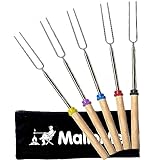
To ensure a safe and enjoyable s’mores experience, make sure you have sturdy marshmallow roasting sticks. These will prevent burnt hands and dropped marshmallows.
Step-by-step (field workflow)
Making a s’more is more art than science, but follow these steps and you’ll be a pro.
1. Build a Safe Fire:
- What to do: If allowed, build your fire in a designated fire ring or a safe, clear spot. Clear a 10-foot radius around the fire pit of any flammable materials. Start with small tinder and kindling, gradually adding larger pieces of wood.
- What “good” looks like: A contained fire that’s burning steadily, with manageable flames. Not a raging inferno.
- Common mistake: Building a fire too big or too close to trees or tents. Avoid this by clearing the area and keeping the fire to a reasonable size.
2. Gather Your S’more Station:
- What to do: Lay out your graham crackers, chocolate bars (broken into segments), and marshmallows. Have your roasting sticks ready.
- What “good” looks like: Everything is within easy reach of the campfire, so you can assemble quickly once your marshmallow is perfect.
- Common mistake: Not having everything prepped. You don’t want to be fumbling for chocolate with a flaming marshmallow in hand.
For ultimate convenience, consider bringing a s’mores kit that includes all the essentials. This ensures you have everything you need for a perfect s’more station.

3. Select Your Marshmallow:
- What to do: Pick a good-sized marshmallow. Not too small, not so huge it’ll fall off.
- What “good” looks like: A plump, firm marshmallow that will hold up on the stick.
- Common mistake: Using stale, hard marshmallows. They’ll either burn instantly or be impossible to toast evenly.
4. Skewer the Marshmallow:
- What to do: Gently push your roasting stick through the center of the marshmallow. Don’t push it all the way through the other side.
- What “good” looks like: The marshmallow is secure on the stick but not so tight it’s about to split.
- Common mistake: Pushing the stick all the way through. This makes it harder to control and increases the risk of dropping it.
Using a good quality marshmallow roasting stick is crucial for even toasting. Look for options that are long and sturdy to keep your hands safe from the heat.
5. Toast the Marshmallow:
- What to do: Hold the marshmallow over the coals or the edge of the flames, not directly in the hottest part. Rotate it slowly and constantly.
- What “good” looks like: A perfectly toasted marshmallow, golden brown and slightly gooey on the outside, warm and melted on the inside. Some folks like a little char, that’s fine too.
- Common mistake: Holding it too close to high flames and instantly igniting it. Patience and gentle rotation are key.
6. Assemble the S’more:
- What to do: Once toasted, slide the marshmallow off the stick onto one half of a graham cracker. Immediately place a piece of chocolate on top of the marshmallow. Place the other graham cracker half on top and gently press down.
- What “good” looks like: A perfectly layered s’more, with the chocolate starting to melt from the heat of the marshmallow.
- Common mistake: Waiting too long to assemble. The marshmallow will cool, and the chocolate won’t melt as well.
7. Enjoy:
- What to do: Eat it immediately. Don’t let it sit around.
- What “good” looks like: Pure, unadulterated s’more bliss.
- Common mistake: Dropping it. It happens. Just pick it up if it’s clean, or start over.
8. Extinguish the Fire:
- What to do: Douse the embers with water. Stir them with a shovel. Douse again. Make sure it’s cool to the touch.
- What “good” looks like: No glowing embers, no smoke, just cool ashes.
- Common mistake: Not fully extinguishing the fire. This is a major fire hazard and a serious offense.
9. Clean Up:
- What to do: Pack out all trash, including any dropped s’more bits.
- What “good” looks like: Your campsite looks like you were never there, or even better.
- Common mistake: Leaving wrappers or food scraps behind. This attracts wildlife and ruins the experience for others.
Common mistakes (and what happens if you ignore them)
| Mistake | What it causes | Fix |
|---|---|---|
| Igniting your marshmallow | Burnt, bitter taste; no gooey center; potential for dropped marshmallow. | Toast over coals or edges of flames, rotate slowly. |
| Not checking fire restrictions | Fines, potential for starting a wildfire, jail time in extreme cases. | Always check official agency websites before you go. |
| Building a fire too close to flammable items | Spreading fire to tents, trees, or dry grass; potential for a major wildfire. | Clear a 10-foot radius around the fire pit. |
| Using stale, hard marshmallows | Difficult to toast, burns quickly, doesn’t get gooey. | Use fresh marshmallows; store them properly. |
| Fumbling with ingredients during assembly | Dropped s’mores, sticky fingers, wasted food. | Prep all ingredients within easy reach before toasting. |
| Not extinguishing the fire completely | Wildfire, environmental damage, legal penalties. | Douse with water, stir, douse again until cool to the touch. |
| Leaving trash behind | Attracts wildlife, pollutes the environment, ruins the campsite for others. | Pack out everything you pack in. |
| Using a flimsy stick that can’t hold weight | Marshmallow falls into the fire, potential for burns. | Use sturdy metal skewers or long, strong sticks. |
| Not having water handy | Inability to quickly put out small flare-ups or extinguish the fire. | Keep a bucket of water and a shovel near the fire pit. |
| Assembling too slowly | Marshmallow cools, chocolate doesn’t melt, s’more is less gooey. | Assemble immediately after toasting. |
Decision rules (simple if/then)
- If fire restrictions are in place, then do not build a fire because it’s illegal and dangerous.
- If it’s very windy, then consider skipping the campfire s’mores or be extra cautious because embers can travel far.
- If you are in a “No Campfire” zone, then do not build a fire because it violates park rules.
- If your marshmallow catches fire, then quickly pull it away from the flames and blow gently because you can still salvage it.
- If you drop your s’more on the ground, then assess the situation; if it’s clean, pick it up, otherwise, make another one because waste not, want not.
- If you can’t get your marshmallow to toast evenly, then try moving it closer to the coals or slightly further from the flame because heat distribution is key.
- If you are camping with kids, then supervise them closely around the fire because safety first.
- If you are using a metal skewer, then be mindful that it can get very hot because you don’t want to burn your fingers.
- If your chocolate isn’t melting, then hold the s’more closer to the warm embers for a few extra seconds because residual heat helps.
- If you are using a gas stove or camp stove for your “campfire,” then ensure you have good ventilation because carbon monoxide is no joke.
- If you see an unattended fire, then report it to the nearest ranger or authority because it’s a safety hazard.
- If you are out of graham crackers, then consider using cookies or biscuits because improvisation is part of camping.
FAQ
How do I get my marshmallow perfectly toasted?
The trick is to hold it over the glowing embers, not the flames. Rotate it slowly and constantly until it’s golden brown and gooey. Don’t rush it!
What’s the best kind of chocolate for s’mores?
Classic milk chocolate bars are the go-to for a reason – they melt beautifully. But feel free to experiment with dark chocolate, mint chocolate, or even peanut butter cups.
Can I make s’mores without a campfire?
Sure can. You can use a gas stove burner (carefully!), a grill, or even a kitchen oven broiler. Just keep a close eye on it; it happens fast.
What if my marshmallow falls off the stick?
Don’t despair! If it lands on clean ground, pick it up quickly. If it lands in the fire, well, that’s a sacrifice to the camping gods. Make another.
How do I keep my s’mores from being too messy?
Assemble them right before you eat them. The heat from the marshmallow will melt the chocolate just enough, and pressing gently helps hold it all together.
Is there a “right” way to eat a s’more?
Nope. Some people like to eat it whole, others take it apart. The goal is enjoyment, so do whatever feels right. Just try not to get too much on your beard.
What are some alternatives to graham crackers?
Chocolate chip cookies, shortbread, or even waffles can make a delicious base for your s’more. Get creative!
How do I clean up sticky marshmallow goo?
A wet wipe or a damp cloth works wonders. For really stubborn bits, a little soap and water will do the trick.
What this page does NOT cover (and where to go next)
- Advanced campfire building techniques (like a Dakota fire hole).
- Detailed Leave No Trace principles beyond waste management.
- Recipes for gourmet campfire desserts.
- Specific regulations for national parks or BLM lands.
- How to identify edible plants or forage for firewood.

Camping Bob has spent over 20 years camping across the US — from BLM dispersed sites in the Southwest to KOA campgrounds in the Pacific Northwest. He writes practical, no-nonsense guides to help fellow campers get outdoors with confidence.