Best Pop-Up / Instant Tents: What to Look For (and Red Flags)
Pop-up and instant tents are awesome when you want fast setup more than “survives a mountain storm.” The trick is buying one that’s honestly built for your use case.
This guide gives you a simple scoring system, the red flags that cause regret, and what features actually matter.
Quick picks (how to choose in 2 minutes)
If you’re buying without overthinking:
- Rain protection: taped seams + full-coverage fly + bathtub floor
- Ventilation: big mesh + at least 2 vents/windows
- Frame: robust hubs + thick poles (avoid toy-like flex)
- Usable space: real vestibule or gear area
- Returns/warranty: buy from a retailer that stands behind it
Pop-up vs instant: what’s the difference?
- Pop-up: springs open (fastest), usually light-duty, can be awkward to fold.
- Instant: poles are pre-attached; setup is fast but usually more structured and stable.
Rule of thumb: if you’re camping more than a couple weekends a year, instant tents age better.
In this hub: Tents & Shelter — choose, set up, and keep your tent dry.
The “Worth It” scorecard
Give 1–5 points each. Total /25.
- Weather package (5)
- Full fly, taped seams, storm flaps, decent floor
- Ventilation (5)
- Roof vents + large mesh + door can crack under fly
- Structure (5)
- Sturdy hubs, reinforced stress points, good guy-out points
- Usability (5)
- Vestibule/gear, pockets, door layout, headroom
- Real-world proof (5)
- Long-term reviews, replacement parts, warranty
Interpreting the score
- 20–25: buy with confidence (for fair-to-moderate weather)
- 15–19: fine for casual use; avoid storms
- <15: usually regret
What to look for (features that matter)
1) Rain protection that’s not marketing
- Full-coverage fly (not a tiny “cap”)
- Bathtub floor that rises several inches
- Factory-taped seams (or easy to seal)
2) Ventilation that prevents condensation
Instant tents often get stuffy because people zip everything shut. Look for:
- Roof vents you can keep open in rain
- Two openings (crossflow)
- Mesh that isn’t blocked by a solid inner panel
Related: Tent Ventilation & Condensation: Why It Happens and How to Prevent It
3) Frame + stress-point reinforcement
The failure point is usually hub joints, corner anchors, or pole sleeves.
Good signs:
- Reinforced webbing at corners
- Extra guy-out points
- Poles that don’t feel like “toy tent” flex
Red flags (skip these)
| Red flag | Why it’s a problem |
|---|---|
| “Instant” but no real fly coverage | You’ll wet out in sustained rain |
| One tiny vent | Condensation city |
| No guy-out points | Wind will deform it |
| Unrealistic capacity claims | A “4P” that fits 2 humans + gear |
| Weak zippers / tiny sliders | The fastest way to hate a tent |
| No parts availability | One break = landfill |
Best use cases (and when NOT to use)
Great for
- Car camping in fair weather
- Festivals
- Short overnight trips
- Beginner families who want fast setup
Not great for
- Shoulder-season storms, exposed windy sites
- Snow load
- Long trips where durability matters
If storms are possible, learn a proper stake + guyline setup:
Buying checklist (copy/paste)
- [ ] Full rainfly + bathtub floor
- [ ] Taped seams (or easy to seal)
- [ ] Two-way ventilation
- [ ] Reinforced corners + guy-out points
- [ ] Vestibule or protected gear space
- [ ] Real reviews (not just unboxings)
- [ ] Warranty / parts
FAQ
Are pop-up tents waterproof?
Some are “showerproof.” For real rain, you want a full fly, taped seams, and a bathtub floor.
Why do instant tents feel humid?
They’re roomy but people close vents. You need two openings and a tensioned fly.
Should I add seam sealer even if it’s “waterproof”?
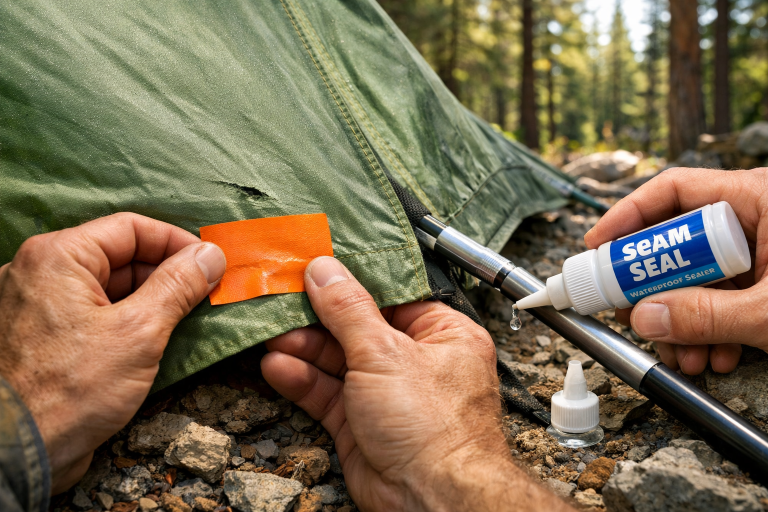
If you camp in sustained rain, sealing vulnerable seams can be cheap insurance.
References (reputable buying guidance)
- REI tent buying guidance: https://www.rei.com/learn/expert-advice/tent.html
Related guides
- How to Waterproof a Tent: Seam Sealing + DWR Refresh
- What Size Tent Do You Need? (2P vs 4P Reality Guide)
- How to Choose a Tent Type: Dome vs Cabin vs Instant vs Pop-Up
Summary
Buy pop-up/instant for speed, then protect yourself with real ventilation, real fly coverage, and real structure. If a tent hides those details, that’s your cue to walk away.

Camping Bob has spent over 20 years camping across the US — from BLM dispersed sites in the Southwest to KOA campgrounds in the Pacific Northwest. He writes practical, no-nonsense guides to help fellow campers get outdoors with confidence.