
How to Build a Fire in Wet Conditions: Tips and Emergency Methods
If everything around you is soaked, your first move isn’t to strike a spark—it’s to find dry material. Even after days of rain, you can usually locate dry wood inside a fallen log, under dense evergreen branches, or by splitting larger pieces. The key is to prepare your tinder and kindling before you light a match.
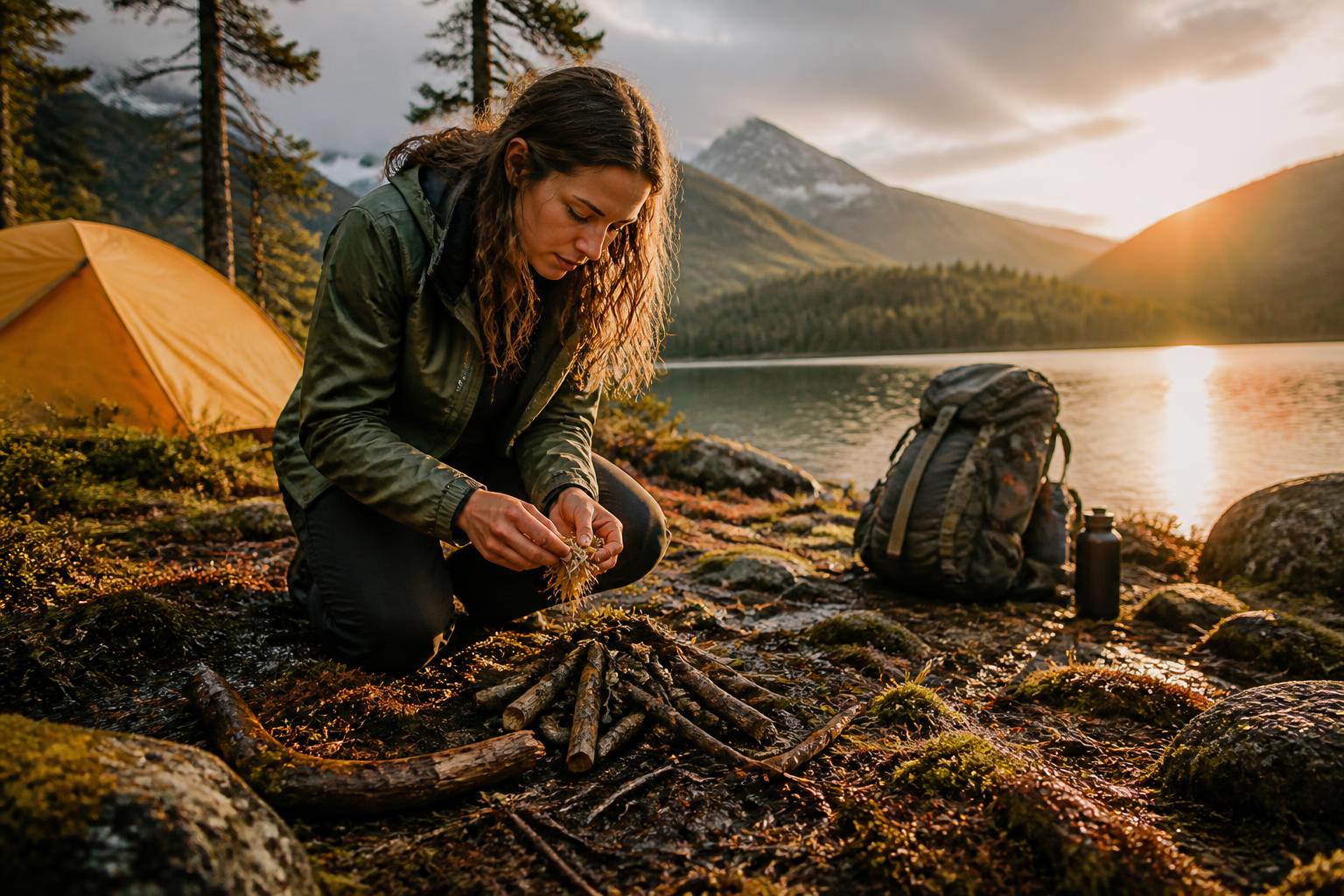
Find Dry Tinder Before You Touch Your Lighter
Wet conditions force you to hunt differently. Dead branches still attached to trees absorb far less rain than ground litter. Peel away the outer bark—the inner wood is often bone-dry. Shift fallen logs to check the underside; the ground contact area stays relatively dry. For kindling, split a thick log with a hatchet or knife; the heartwood near the center is your best bet for dry, splintery curls. Birch bark, even when damp on the outside, lights easily because of its natural oils. Collect a generous pile of these materials before you start assembling the fire.

Build a Platform to Lift Your Fire Off the Wet Ground
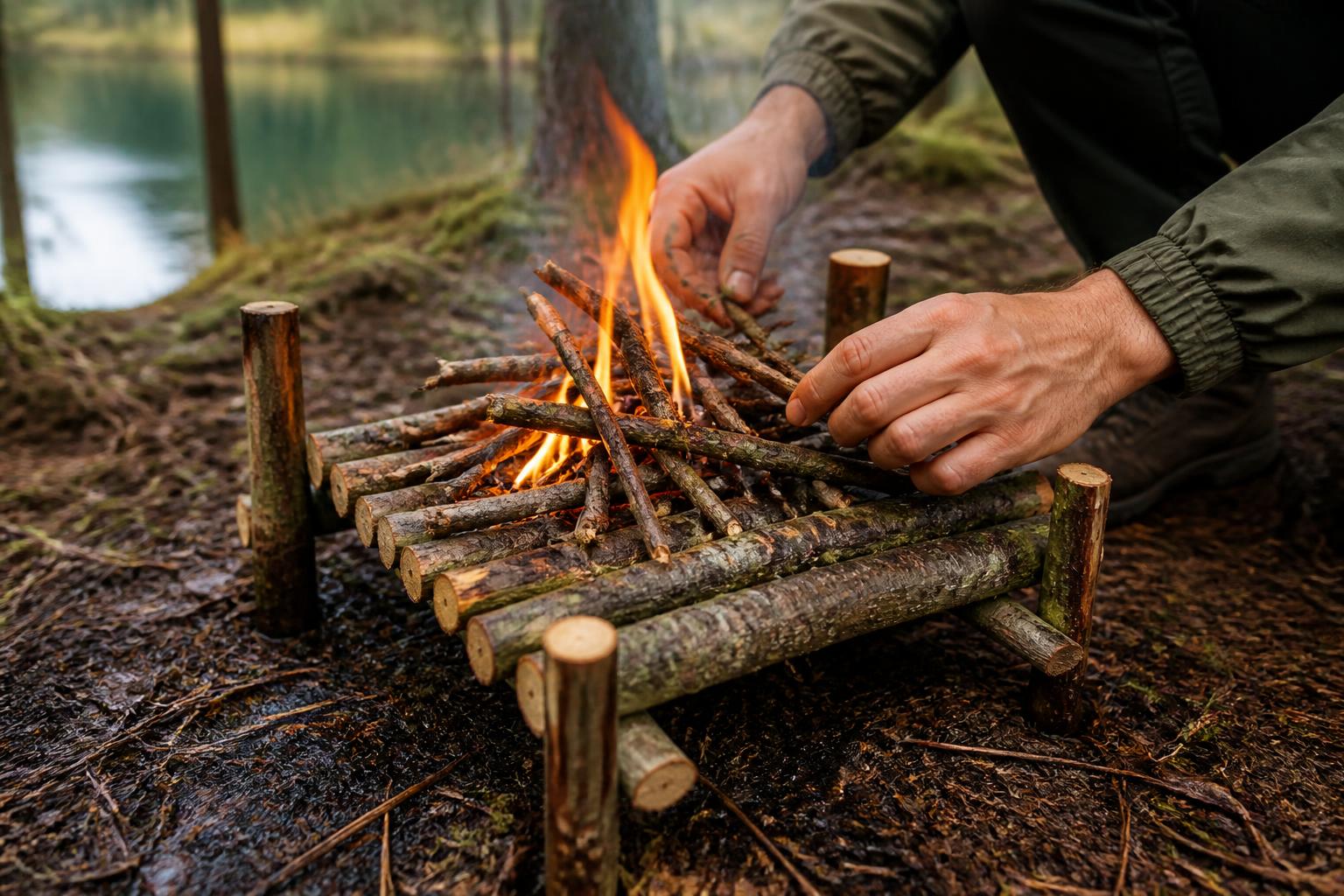
A fire sitting directly on wet soil or moss will struggle to get going. Use two wet logs or thick branches laid parallel about 6 inches apart. Cross a layer of dry sticks over them to create a raised floor. This platform accomplishes two things: it keeps your tinder away from ground moisture and allows airflow underneath. Stack your tinder nest and kindling on top.
Step-by-Step: Lighting the Fire in Damp Conditions
- Prepare a tinder bundle – Shave fine, feathery curls from dry wood, or fluff up a fire-starting cube. The bundle should be about the size of a baseball with one compact end and a loose, fuzzy end for catching sparks.
- Arrange kindling in a teepee – Place pencil-thin sticks around the tinder, leaving a small opening on the windward side. Lean larger sticks against the teepee as the fire grows.
- Ensure bottom airflow – The platform’s gaps provide this naturally. If you skipped the platform, use a small handful of dry grass or sticks as a base.
- Light the tinder – Use a lighter, matches, or ferro rod. Aim for the bottom center of the bundle. Light from two sides if possible to spread the flame faster.
- Add kindling gradually – Once the tinder catches, add one or two sticks at a time, letting each ignite before adding the next. Resist dumping a handful.
- Protect from rain – If still drizzling, prop a poncho, tarp, or large piece of bark over the fire site at an angle so it shelters but doesn’t smother the airflow.
Quick Decision Aid: Is Your Fire Setup Ready?
Check each item before lighting:
- Tinder is fine, fuzzy, and dry? (If not, rework it.)
- Kindling pieces are no thicker than your thumb?
- Platform lifts the tinder at least 2 inches off the ground?
- Airflow gap is clear on at least two sides?
- Wind/rain shelter is positioned nearby but not blocking the opening?
- Extra dry wood is stockpiled within arm’s reach?
If you can answer “yes” to all six, you’re ready to light.
When It Won’t Catch: Likely Causes and Fixes
- Damp tinder – A slightly damp tinder bundle will smoke but not sustain a flame. Split a new piece of wood or switch to a commercial fire starter.
- Too much kindling too fast – The flame is starved of oxygen by too many sticks at once. Remove half the kindling and add them one at a time.
- No airflow – The teepee is too closed or the platform has collapsed. Open up a gap on the downwind side.
- Ground water wicking up – Moisture is seeping into your platform. Add another layer of wet logs or a piece of bark underneath.
When to Stop and Try a Different Spot
If after three tries your tinder bundle won’t hold a flame for more than 10 seconds, stop lighting. The fuel is too wet or the location is drawing moisture from the ground faster than you can dry it. Move to a different site: look for a well-drained area under a dense canopy, or use a large rock as a base instead of bare soil. If you’re still failing after moving, your tinder itself is likely contaminated with moisture—start fresh with a new bundle from a different source.
Emergency Methods for Extreme Wet
One counter-intuitive trick that most articles skip: use the wet wood itself. A split log with a dry core can serve as a fireboard—place your tinder directly on the dry inner face, then lean kindling against it. The mass of the wet log helps shield the flame from drizzle. Another method: if you have a candle, bury it in the soil so only the wick sticks out, light it, and surround it with tinder. The candle flame burns steadily even in light rain. Petroleum jelly–soaked cotton balls will ignite even after being dipped in water—wring them out and fluff the fibers.
Success Check: Your Fire Is Secure When…
- The base is hot enough to ignite a log as thick as your wrist without adding more tinder.
- Flames burn steadily with minimal smoke.
- You can add slightly damp wood (the outer surface is wet but the core is dry) and it dries out and catches without smothering the fire.
How to verify: After your first wrist-thick log is fully lit, wait 2 minutes. Then place a medium-damp stick across the coals. If it begins to smoke within 30 seconds and sustains a flame within 1 minute, the fire is self-sustaining. If it only smokes and goes out, the bed isn’t hot enough yet—add more dry kindling and wait before trying damp wood.
A Real Failure Mode to Watch For
A common mistake is overloading the fire with damp wood once it seems established. You see a decent flame and toss on a wet log that looks okay on the outside, but the interior is waterlogged. The log smothers the flame, and suddenly you’re back to smoldering embers. Symptom: the fire goes from bright to dim within 30 seconds of adding the log. The likely cause is the log’s steam blanket displacing oxygen. Safer next move: remove that log with a stick and let the fire re-establish with dry wood only for at least 5 minutes. Test the log by holding a flame to a freshly split face—if it hisses or won’t ignite, it’s too wet to add yet.
FAQ
What if I only have wet logs?
Split them open. The interior of a large log is often dry even after heavy rain. Use the dry shavings and heartwood as tinder and kindling. If the entire log is waterlogged, it won’t burn until you have a strong, hot established fire—so prioritize finding smaller dead branches from standing trees first.
Can I use green (live) wood in wet conditions?
Green wood contains too much moisture to ignite directly. It can only be added once you have a hot bed of coals. Stick to dead branches for starting your fire.

Camping Bob has spent over 20 years camping across the US — from BLM dispersed sites in the Southwest to KOA campgrounds in the Pacific Northwest. He writes practical, no-nonsense guides to help fellow campers get outdoors with confidence.